
Last week, a federal judge struck down the State Department’s freeze on immigrant visas from 75 countries, ruling the policy unlawful. The administration’s response was not to narrow the policy. It was to expand it to everyone. On Tuesday, the State Department announced it is suspending and rescheduling all immigrant visa appointments worldwide — every country, every applicant — while every employee who decides visa applications undergoes mandatory “intensive training” on scrutinizing whether applicants might become a “public charge.” No end date has been announced. And a second action is queued behind the freeze: the administration is preparing to revoke up to 200,000 existing visitor visas held by people who later sought asylum — a move the White House itself describes as the largest mass visa revocation in American history. “A privilege, not a right,” is the administration’s framing. The courts will get all of it, eventually. The freeze is operating now.
The Ruling They Lost
The policy the court struck down was itself sweeping: a freeze, imposed earlier this year, on issuing immigrant visas — the visas for people moving to the United States permanently — to nationals of 75 countries, a list that included Afghanistan, Brazil, Egypt, Iran, Iraq, Nigeria, Somalia, Thailand, and Yemen. U.S. District Judge Jeannette A. Vargas of the Southern District of New York vacated the freeze, ruling against Secretary of State Marco Rubio’s authority to impose it. The decision was a major loss for the administration’s immigration agenda: the 75-country pause had halted family reunifications, employment-based immigration, and diversity visa processing for a substantial share of the world’s population, and the court’s ruling ordered the machinery restarted.
The Freeze That Followed
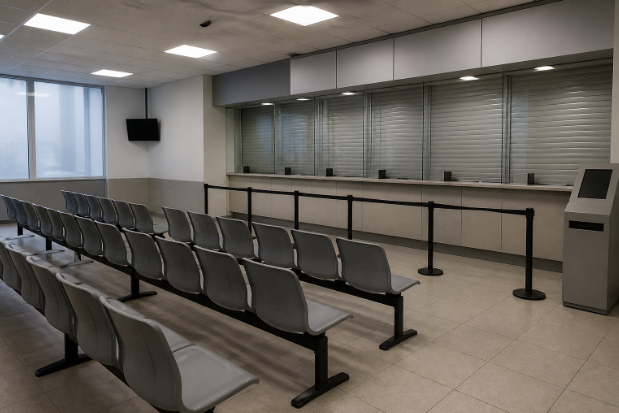
Within days, the machinery stopped again — all of it, everywhere. The State Department’s announcement suspends all immigrant visa appointments globally so that every consular officer responsible for deciding applications can complete mandatory training on “public charge” review, with the stated goal of making those evaluations more comprehensive and consistent from post to post. The Washington Examiner reported appointments canceled “until further notice.” Bloomberg Law’s headline captured the practical effect: immigrant visa interviews, frozen again. The formal legal posture is different — a training pause is not a country ban, and that is precisely the point. A court order struck down a freeze defined by nationality; the replacement is a freeze defined by process, applying to the 75 enjoined countries and the other 120 alike. Whether a court will treat a global administrative pause as compliance with an order to restart processing, or as circumvention of it, is now the obvious next question in Judge Vargas’s courtroom.
What “Public Charge” Means
The public charge doctrine dates to the 1880s: the government may deny entry to an immigrant deemed likely to depend on public support. Its breadth has always been in its elasticity — what counts as “likely,” and what counts as “dependence,” have expanded and contracted with each administration. The first Trump administration broadened the test to include potential use of programs like Medicaid and SNAP before courts and the Biden administration rolled it back. Making public charge review “more comprehensive” at every post in the world is, in practice, a decision that every immigrant visa on earth should be harder to get — implemented not through a rule that can be challenged, but through the training of the people who say yes or no.
The 200,000
The revocation plan reported by PBS and other outlets targets B1 and B2 visas — the standard business and tourism visas — issued between 2016 and 2026, held by people who sought asylum after arriving. The administration’s theory is that applying for asylum after entering on a visitor visa reveals the visa was obtained under false pretenses. The legal difficulty with that theory is that United States law expressly permits people to apply for asylum regardless of how they entered, generally within one year of arrival — a person can arrive on a valid tourist visa, witness conditions in their home country deteriorate, and lawfully seek protection; nothing in that sequence is fraud. Officials told reporters the revocations would reach “up to 200,000” people and would constitute the largest mass visa revocation in the country’s history — a superlative the White House offered itself. Legal challenges are universally expected if the revocations proceed.
The Pattern
Readers of this newsletter will recognize the shape of the week. When the Supreme Court knocked out the states’ challenge to the mail voting order, the administration’s Postal Service rule went national within days. When a judge struck the 75-country visa freeze, the pause went global within days. The recurring move is the same: a courtroom loss on a specific policy is answered with a broader version of the policy in a form that resets the litigation clock — new action, new challenges, new months of delay, while the policy operates. Its effect here is measured in stopped lives rather than abstractions: families mid-reunification, workers with approved petitions, diversity visa winners with deadlines, all waiting on a training program with no announced end, ten weeks before an election in which the administration has made immigration enforcement a closing argument.
Where Things Stand
The worldwide interview suspension is in effect with no announced end date. The mass revocation is announced but, as of this writing, not yet executed. The plaintiffs who beat the 75-country ban are positioned to return to Judge Vargas, and new suits over both actions are expected. What the last two weeks of litigation — over ballots and visas alike — have established is that the administration’s answer to losing in court is neither compliance nor appeal alone, but escalation. The People’s Podium will follow what the courts do with that answer.