
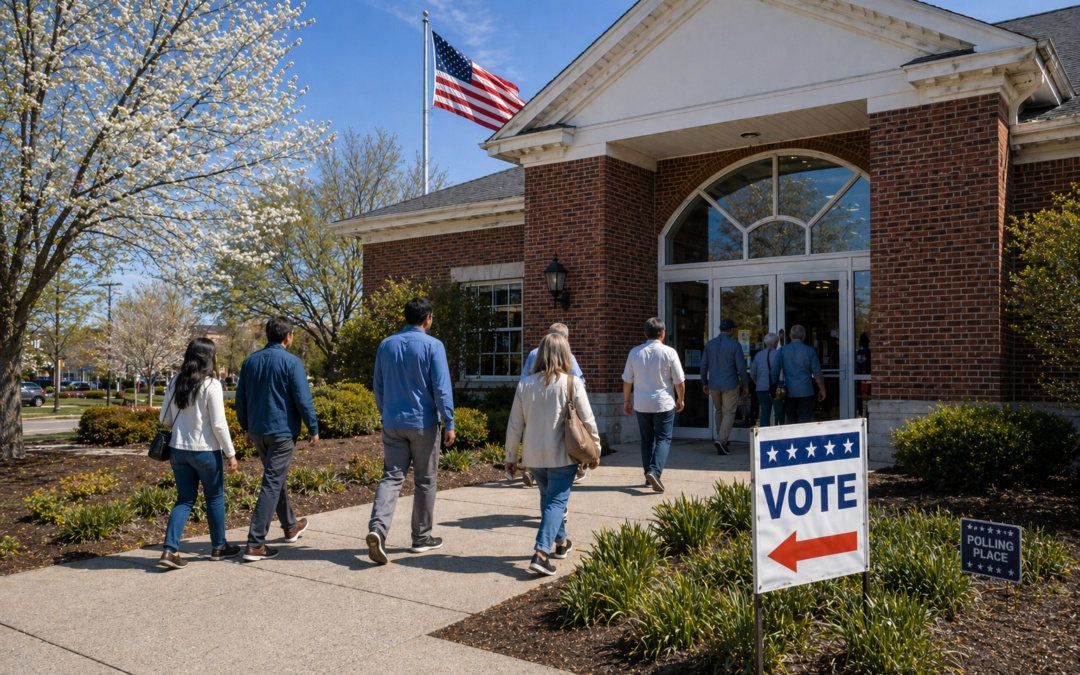
Virginia is holding a special election today on a constitutional amendment that could reshape the fight for the House of Representatives in November. Polls close at 7 p.m.
The question is simple on the surface: should Virginia temporarily allow its Democratic-controlled state legislature to draw new congressional maps? The stakes are anything but simple.
What the Amendment Would Do
If passed, the amendment would temporarily give the Virginia General Assembly the power to draw the state’s congressional districts, bypassing the bipartisan redistricting commission that Virginia voters created in 2020. The commission’s authority would be restored after the 2030 census.
The legislature has already drawn a map. Under that map, Democrats would be positioned to win up to 10 of Virginia’s 11 congressional districts. Currently, Democrats hold 6.
That is a potential swing of four seats. In a House where Republicans can currently afford exactly one defection on any party-line vote, four seats from a single state could determine control of the chamber in November.
Why Democrats Are Pushing This
Democrats argue the current map, drawn by the bipartisan commission, underrepresents Virginia voters in a state that has been trending strongly Democratic. They point to the 2025 gubernatorial election, which Democrats won in a landslide. They also point to the broader national landscape: Republican-controlled states have drawn aggressive gerrymanders that give the GOP a structural advantage in the House that does not reflect the national popular vote.
The pro-amendment side has massively outspent its opponents and has the backing of the Democratic-controlled legislature and Governor Glenn Youngkin’s successor.
Why Critics Are Pushing Back
Opponents argue that Virginia voters chose the bipartisan commission in 2020 precisely to take partisan map-drawing out of the equation. Replacing a commission-drawn map with a 10-1 Democratic gerrymander, they say, is exactly the kind of partisan manipulation that amendment was designed to prevent.
A Virginia circuit court judge agreed, ruling the amendment unlawful in January. The Virginia Supreme Court overruled that decision in February and allowed the referendum to proceed.
NPR reported ahead of Tuesday’s vote that many voters say they feel confused and misled about what they are actually voting on, with both sides accusing the other of distorting the amendment’s effects.
The National Picture
The midterm elections are in November. Democrats need to flip a handful of seats to take back the House. Virginia, which has 11 congressional districts and a Democratic lean at the statewide level, is one of the most significant redistricting opportunities available to them.
If the amendment passes and the new map holds, Democrats would go into November with four additional competitive seats in a state where they consistently win statewide races. Combined with the NJ-11 special election result last week, which tightened the House majority to a single vote, it would represent a significant shift in the battle for the chamber.
If it fails, the bipartisan commission map stays in place and Democrats hold their current six seats.
What to Watch For
Turnout is the key variable. Special elections in Virginia historically draw low participation. The pro-amendment side has spent significantly more money and has a more organized ground operation. But the vote is expected to be close, and with many voters reporting confusion about what the amendment actually does, late-deciding voters could break either way.
Results are expected tonight. If the amendment passes, legal challenges are almost certain to follow, which could push the map’s implementation into the courts before November’s filing deadlines.
The fight for the House may not be decided in November. It may start being decided in Virginia tonight.