
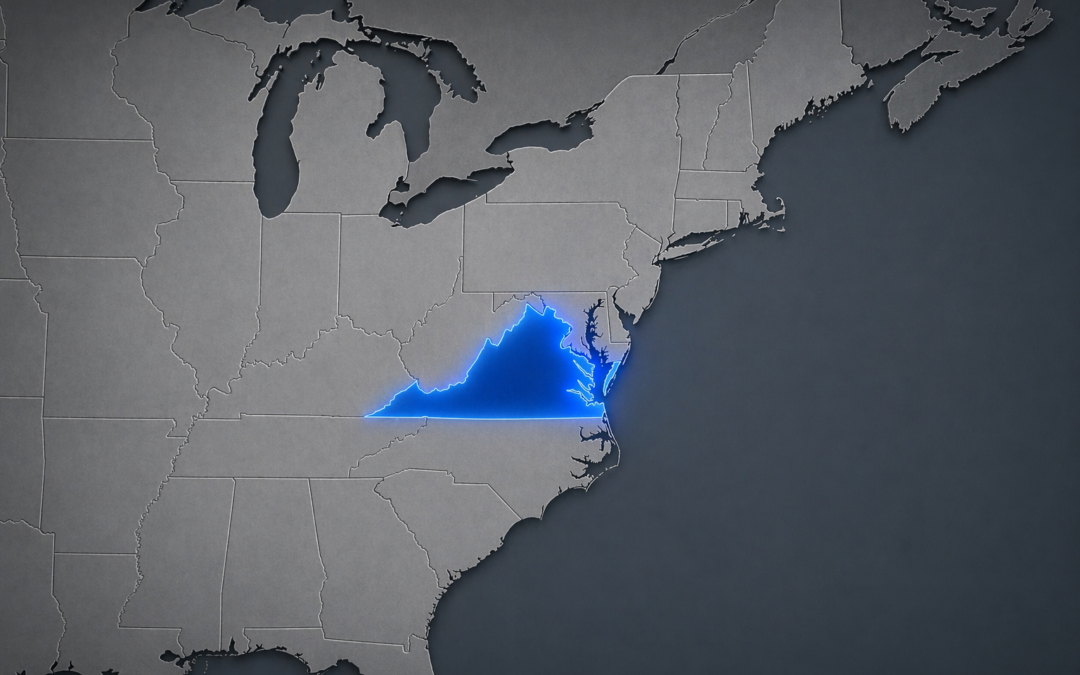
Virginia voters narrowly approved a constitutional amendment on April 21, giving the Democratic-controlled state legislature authority to draw new congressional maps before the November midterms. The measure passed 50.7 percent to 49.3 percent, out of roughly 2.5 million ballots cast.
The result shifts Virginia’s congressional delegation from its current 6-5 Democratic split to a projected 10-1 advantage. That is a potential net gain of four seats for Democrats in a House where Republicans currently hold a majority so thin that Speaker Mike Johnson can afford exactly one defection on any party-line vote.
What the Amendment Does
The amendment temporarily bypasses Virginia’s bipartisan redistricting commission, which has controlled the mapmaking process since voters approved it in 2020. Under the new arrangement, the Democratic-controlled legislature draws the maps directly. The commission regains authority after the 2030 census.
The new map, if implemented as drafted, leaves just one solidly Republican district out of Virginia’s eleven. The other ten would be drawn to favor Democrats. Republicans currently hold five of those seats.
Trump and Johnson Tried to Stop It
The night before the vote, Trump joined House Speaker Mike Johnson on an election-eve tele-rally urging Virginians to reject the amendment. Trump called it “a blatant partisan power grab that nobody’s really ever seen anything like it.” He also called into a conservative Virginia talk radio show to make the same argument directly to voters.
It did not work.
Democratic Governor Abigail Spanberger was direct in her response after the results came in. “Virginia voters have spoken, and tonight they approved a temporary measure to push back against a President who claims he is ‘entitled’ to more Republican seats in Congress,” she said. “Virginians watched other states go along with those demands without voter input and we refused to let that stand. We responded the right way: at the ballot box.”
Democratic Virginia House Speaker Don Scott framed it as a national turning point. “Virginia just changed the trajectory of the 2026 midterms,” he said. “At a moment when Trump and his allies are trying to lock in power before voters have a say, Virginians stepped up and leveled the playing field for the entire country.”
The National Redistricting War
Virginia’s vote did not happen in a vacuum. Trump launched a national mid-decade redistricting push last year, pressuring Republican-controlled states to redraw maps in ways that could expand the GOP’s House majority before the midterms even happen.
Texas Republicans complied, drawing new maps that could net Republicans as many as five additional seats. Republicans pursued similar efforts in other states, with analysts projecting a potential gain of nine or more seats from the redistricting campaign as a whole.
Democrats responded. California voters approved a similar measure, producing five additional Democratic-leaning districts. A court-ordered change in Utah added one more. Virginia’s four potential pickups bring the Democratic redistricting total to ten seats, matching or exceeding what Republicans stand to gain from Texas and elsewhere.
The redistricting war that Trump started has, for the moment, ended roughly even. And Democrats did not need a single act of Congress or a favorable court ruling to get there. They used ballot measures and state legislatures, the same tools Republicans used first.
What Comes Next
The new maps still face legal challenges. Republican groups filed suits before the vote and are expected to press those cases in federal court. Virginia’s Republican-leaning Supreme Court could also play a role depending on how litigation is structured.
The legislature has indicated it will move quickly to finalize and implement the maps. Whether the new districts are in place before November depends on how fast the courts act.
For now, four Virginia congressional districts that currently send Republicans to Washington are being redrawn to favor the other party. Four incumbents are looking at significantly harder races than they expected six months ago. And Democrats, who need only a handful of net seats to take the House, just picked up four of them on a Tuesday night in Virginia.
Republicans lost this one at the ballot box, despite the President of the United States making personal calls to stop it.