
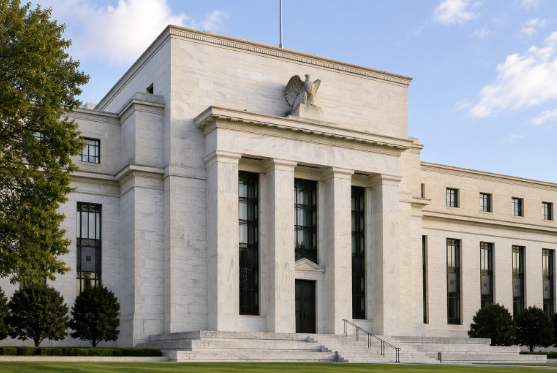
The Supreme Court ruled June 29, 2026, that President Trump can fire the heads of independent federal agencies at will, even when Congress passed laws saying those officials could only be removed for specific cause. In doing so, the Court’s six conservative justices overturned Humphrey’s Executor v. United States, a unanimous 1935 ruling that for ninety one years had protected leaders of agencies like the Federal Trade Commission from being fired simply because a president wanted someone else in the job. In a separate ruling issued the same day, a different five justice majority said the Federal Reserve is not covered by that new rule, meaning Trump still cannot remove Fed Governor Lisa Cook without first giving her notice of specific charges and a chance to respond.
What Changed for Most Agencies
Humphrey’s Executor was the legal foundation that let Congress create agencies meant to operate independently of whichever party controls the White House, by requiring presidents to show cause, such as neglect of duty or misconduct, before removing their leaders. Overturning it clears the way for the president to fire leaders of the Federal Trade Commission, the National Labor Relations Board, the Merit Systems Protection Board, and the Consumer Product Safety Commission without needing any justification at all. These are agencies that, among other things, enforce antitrust law, referee disputes between employers and unions, protect federal whistleblowers, and regulate the safety of household products.
Why the Fed Got Carved Out
Chief Justice John Roberts wrote the 5-4 opinion in Cook’s case, joined by Justice Brett Kavanaugh and the Court’s three liberal justices, Elena Kagan, Sonia Sotomayor, and Ketanji Brown Jackson. Roberts wrote that the Federal Reserve is “uniquely structured” among federal agencies, with 14-year board terms designed specifically to insulate monetary policy from short-term political pressure. Trump announced he was firing Cook on August 25, 2025, citing allegations that she had committed mortgage fraud, which Cook has denied. Roberts ruled that Cook is entitled to notice of the specific charges against her and a chance to respond before any termination takes effect, though he said that process does not require a courtroom trial or a personal meeting with the president. Cook remains on the Fed’s board while her underlying lawsuit continues in the lower courts.
The Dissents Came From Both Directions
Justice Clarence Thomas dissented from the Cook ruling, joined by Justices Samuel Alito, Neil Gorsuch, and Amy Coney Barrett, arguing the majority’s case for protecting an independent central bank amounted to “policy arguments” that were “ultimately arguments against the Constitution.” Barrett wrote separately that the injunction effectively forbids Trump from ever removing Cook over the mortgage fraud allegations specifically, not just from skipping the notice process. In other words, four justices, including three of the Court’s most conservative members, wanted Trump to have the power to fire Cook outright, the same power the broader ruling just gave him over nearly every other independent agency in the federal government.
Where It Stands
Leaders at the FTC, NLRB, MSPB, and CPSC, along with similar agencies, can now be removed by the president without cause, a power no modern president has had since 1935. Lisa Cook keeps her seat on the Fed’s board for now, protected by a narrower rule that four justices wanted to erase entirely. Her mortgage fraud case has not been resolved, and the broader lawsuit over her firing continues in lower courts, where the notice and response process the Court just ordered has not yet happened.