
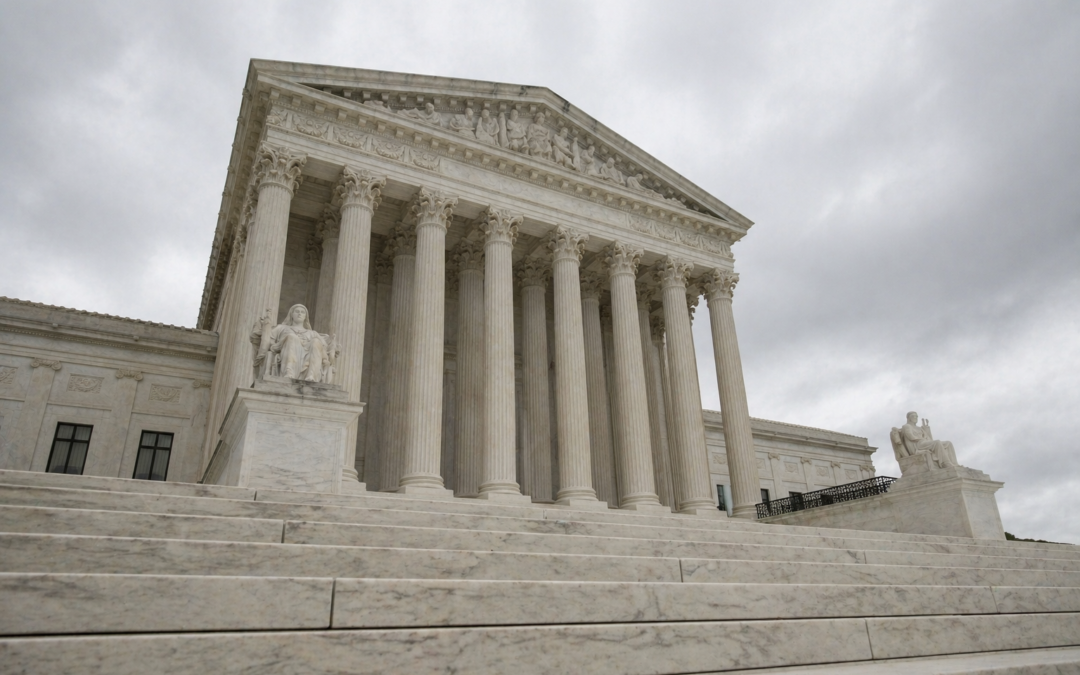
The Supreme Court ruled 6-3 on Wednesday to sharply limit the Voting Rights Act’s power to protect minority voters from discriminatory redistricting. By the time the ruling was an hour old, Florida Republicans had passed a new congressional map designed to flip four Democratic seats to Republican.
The two events were not a coincidence. They were a coordinated one-two punch that may have just reshaped the fight for the House majority.
What the Court Ruled
The case, Louisiana v. Callais, centered on a Louisiana congressional map drawn to include a second majority-Black district. The court’s conservative majority found that drawing the map with race as a primary consideration was an unconstitutional racial gerrymander, even though the map was drawn specifically to comply with the Voting Rights Act.
Justice Samuel Alito wrote for the majority that Section 2 of the Voting Rights Act “was designed to enforce the Constitution, not collide with it.” The ruling effectively rewrites the standard courts use to evaluate redistricting challenges, making it nearly impossible for minority voters to successfully challenge maps that dilute their political representation.
Justice Elena Kagan, writing in dissent joined by the court’s two other liberal justices, called it one of the most consequential rulings in the court’s history. “Today’s decision renders Section 2 all but a dead letter,” she wrote. “In the States where that law continues to matter, minority voters can now be cracked out of the electoral process.”
Democrats called it a “devastating blow.” The NRCC called it “a victory for the Constitution.”
Florida Did Not Wait
Within an hour of the ruling, the Florida House approved a new congressional map drawn by Governor Ron DeSantis. The map is designed to give Republicans a 24-4 advantage in Florida’s congressional delegation. The current split is 20-8.
That is a potential shift of four seats, the same number Democrats stood to gain from Virginia’s redistricting vote last week. Florida’s map, now awaiting DeSantis’s signature, could erase that gain entirely.
The map concentrates Black Democratic voters into fewer districts, making surrounding seats more favorable to Republicans, a strategy made significantly easier by Wednesday’s ruling. Democrats and civil rights groups have said they will sue once DeSantis signs it. Whether those lawsuits have any chance of success under the new legal standard is now a very different question than it was Tuesday.
The Redistricting War Scorecard
The fight for the House majority is being waged district by district through mid-decade redistricting, and Wednesday’s developments shifted the balance.
Before Wednesday, Democrats appeared to be ahead. California’s redistricting added five Democratic-leaning seats. Virginia’s April 21 vote added four more. A court-ordered change in Utah added one. That was ten Democratic gains against roughly nine projected Republican gains from Texas and other states.
Florida’s four new Republican seats, if the map holds, bring Republicans back to even or ahead. And the Supreme Court’s ruling opens the door for additional Republican-led states in the South to redraw their own maps with far less legal risk than before.
What Comes Next
Legal challenges to Florida’s map are expected immediately. Whether they succeed depends almost entirely on how lower courts interpret Wednesday’s ruling, and whether the Supreme Court’s conservative majority is willing to block any further map changes before November.
Beyond Florida, states including Georgia, Alabama, and South Carolina are expected to revisit their own maps in the wake of the ruling. Each redraw carries the potential for additional Republican seat gains that would have been far riskier to attempt before Wednesday.
The Voting Rights Act was signed into law in 1965 to protect minority voters who had been systematically excluded from the political process across the South. Wednesday’s ruling does not erase it. What it does is remove the most effective legal tool available to challenge maps that accomplish the same result through different means.
Justice Kagan’s dissent called it plainly: minority voters in the states where the law mattered most “can now be cracked out of the electoral process.” The majority disagreed. Florida did not wait to find out who was right.