
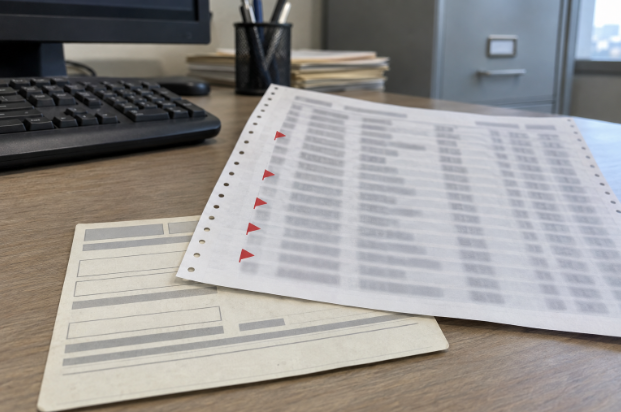
While the mail ballot fight holds the spotlight, a second emergency application about your right to vote is sitting at the Supreme Court, and it may be the more consequential one. On Tuesday, September 8, the Justice Department asked the justices to lift a lower court order blocking the Department of Homeland Security from using a repurposed immigration database, one built to check eligibility for government benefits, as a machine for flagging registered voters as potential noncitizens. Before a federal judge shut it down in June, the administration ran the citizenship of more than 67 million registered voters through that system. It flagged thousands as potential noncitizens; on further investigation, per the Associated Press’s reporting, most turned out to be eligible voters. The judge found the program “haphazardly” threatened “the sacred right to vote” and “trampled on the privacy rights of American citizens.” The appeals court refused to revive it. Now, seven weeks before the election, the administration wants the Supreme Court to switch it back on. Chief Justice John Roberts has ordered the challengers to respond by 4 p.m. Tuesday, September 15.
What SAVE Was, and What It Became
The system is called SAVE, the Systematic Alien Verification for Entitlements program, and its name describes its actual job: helping agencies verify the immigration status of people applying for government benefits. It was never designed to answer a different question, whether a registered voter is a citizen, because the underlying records were never built for it. Naturalized citizens, name changes, data entry gaps, and stale records all produce false flags when the database is pointed at voter rolls, which is why, in states that used it this way, eligible voters were routinely marked as noncitizens. The administration modified SAVE anyway, following the March executive order on elections, and turned it into a national screening tool for state voter registration lists. That is the machine that processed 67 million voters before June, and the machine the Supreme Court is now being asked to restart with early voting underway in the first states.
What the Courts Found
U.S. District Judge Sparkle Sooknanan blocked the modified program in June, finding it violated several federal laws. Her language was unusually direct: the effort “haphazardly” threatened “the sacred right to vote” and “trampled on the privacy rights of American citizens.” The D.C. Circuit Court of Appeals declined to pause her order just days before the Supreme Court filing, though it expedited the underlying appeal. In his application, Solicitor General D. John Sauer called Sooknanan’s order “indefensible” and argued it “threatens the integrity of upcoming elections by vacating the federal government’s authority to internally use Social Security data when fulfilling its duty to respond to requests by States to verify the citizenship of individuals for voting and other purposes.” Note the framing: the government describes itself as merely responding to state requests. The record tells a fuller story.
“Requests” Under Pressure
The department’s own conduct shows how voluntary those state requests are. Per Democracy Docket’s reporting, DHS has told states they must use the SAVE program or lose access to emergency and disaster grants. And Homeland Security Secretary Markwayne Mullin, whose statements about prosecuting officials this newsletter examined on August 17, warned state election chiefs earlier this year that they could face criminal charges for declining: “The states who choose not to participate with the SAVE program, and they choose not to participate in secure elections, we will make sure that we make those states a priority to look at who voted in their states and will hold them, the election officials, accountable.” A program is not voluntary when declining it costs disaster aid and invites prosecution. That is the “duty to respond to requests by States” the Supreme Court is being asked to restore.
The Problem the Program Solves Does Not Exist
The stated purpose is preventing noncitizens from voting. Noncitizen voting is already a federal crime, and it is vanishingly rare: dozens of studies and state audits, including reviews by Republican officials, have found it occurs in negligible numbers. A Utah review found 99 percent of flagged voters were citizens; Georgia’s hunt for noncitizen voters this year, per the Atlanta Journal Constitution, yielded few results even after the administration diverted federal investigative resources to the search. What the program demonstrably does produce is false flags on eligible voters at scale, each one a potential removal letter, a challenged ballot, or a burden of proof shifted onto a citizen. Run that error rate across 67 million records seven weeks before an election and the arithmetic becomes the story: a tool that cannot find the fraud it hunts, but reliably finds eligible voters to flag.
The Bigger Machine
The SAVE expansion is one component of something larger. Following the March executive order, DHS has posted a “Citizenship Lists Portal” and begun compiling state by state lists of people it deems eligible to vote, which, combined, would amount to a national voter registration list managed by the federal government, something that has never existed in American history and that federal election law never authorized. The Electronic Privacy Information Center sued over those lists in the first week of September. Put the pieces side by side: a federal ballot screening rule at the Postal Service, a federal citizenship database pointed at state voter rolls, and a federal master list of eligible voters under construction, each blocked or contested in court, each the subject of an emergency application or expedited appeal. The administration describes each piece as modest. The pattern is the point.
Where Things Stand
The challengers, represented by Democracy Forward, respond by Tuesday at 4 p.m.; its president, Skye Perryman, previewed the argument: “Court after court has rejected the Trump-Vance administration’s effort to revive an unlawful system that puts Americans’ privacy and fundamental freedom to vote at risk.” The mail voting stay application remains pending at the same courthouse, meaning the justices will spend the coming week deciding two emergency requests that each reshape election administration mid-election. The Federal Reserve’s rate decision lands Wednesday, September 16, the day after the response deadline. Fifty two days before the election, the through line of this newsletter’s fall coverage is now unmistakable: the fights that decide November are happening in September, on the emergency docket, one application at a time.