
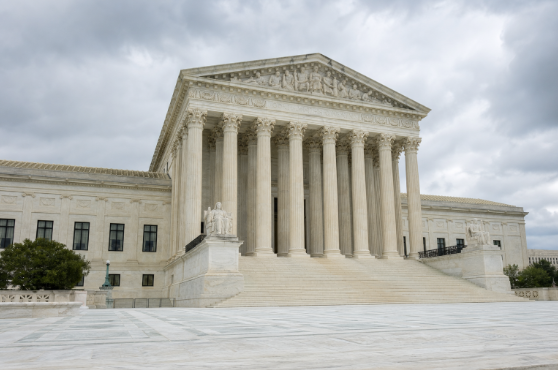
On July 23, 2026, Supreme Court Justice Elena Kagan addressed an audience of lawyers and judges from the Ninth U.S. Circuit Court of Appeals in Bellevue, Washington. She pushed back on the growing perception that the Supreme Court operates as an arm of the Trump administration. ‘Is this court very conservative?’ she said. ‘Does it do a bunch of things that are out of the playbook of the conservative legal movement that I think are deeply wrong? You know, yes. But is this court the kind of puppet for the current administration? I think definitely not.’ Kagan pointed to two major rulings where the court sided against Trump: its February 2026 decision striking down his sweeping tariffs and its rejection of his executive order eliminating birthright citizenship. Those rulings are real. So is the rest of the term’s record.
Where the Court Ruled Against Trump
The two cases Kagan cited are significant. In February 2026, the Supreme Court struck down the tariffs Trump had imposed on nearly every country on Earth under the International Emergency Economic Powers Act, ruling that the law did not authorize tariffs. The decision invalidated what had been the central pillar of Trump’s trade policy and required the government to refund importers who had already paid. Separately, the court rejected Trump’s executive order that sought to end birthright citizenship, the constitutional guarantee under the Fourteenth Amendment that children born on American soil are citizens regardless of their parents’ immigration status. That ruling drew Chief Justice John Roberts to the liberal side of the court. Roberts has joined the court’s three liberal justices on a small number of high-profile cases, and legal observers have closely tracked those moments as data points on the court’s independence.
Where the Court Sided With Trump
The court sided with the Trump administration in the large majority of significant cases it decided this term. In a 6-3 ruling, the court held that the president has unreviewable authority to terminate the Temporary Protected Status program, a humanitarian protection that allows nationals of designated countries experiencing ongoing armed conflict, natural disasters, or other extraordinary conditions to live and work legally in the United States. The ruling cleared the way for the administration to end TPS protections for hundreds of thousands of Haitian and Syrian nationals, many of whom have lived in the United States for years and built families and businesses. The court also allowed the administration to further restrict asylum access at the border and expand immigration enforcement authority over certain green card holders. In a separate line of cases, the court ruled 6-3 that the president has the authority to fire commissioners of independent federal agencies without cause, overturning a 91-year-old precedent. That ruling allowed Trump to remove the Democratic commissioners of the Federal Trade Commission and has significantly expanded presidential control over agencies that were previously designed to operate independently of the White House. The court also allowed the administration to proceed with dismissing thousands of federal workers and to enforce its ban on transgender service members in the military.
The Voting Rights Act
One of the term’s most significant rulings did not directly involve the Trump administration but has substantial consequences for voting rights. In a 6-3 decision, the court weakened Section 2 of the Voting Rights Act of 1965, which prohibits voting rules and procedures that discriminate on the basis of race. The court struck down a Louisiana congressional district map that had been drawn to include a second majority-Black district, returning the state to a configuration with only one. Legal analysts and civil rights organizations described the ruling as effectively rendering Section 2 inoperable as a tool for challenging racial discrimination in redistricting. Justice Ketanji Brown Jackson, who dissented, said in May that the ruling represented a severe undermining of a law passed specifically to protect Black voters’ political power, and that the institution risked being perceived as political. The American Civil Liberties Union called it the final blow dismantling the Voting Rights Act.
Public Trust and the Perception Problem
The backdrop to Kagan’s remarks is a court facing historically low public trust. Polling over multiple years has found confidence in the Supreme Court near its lowest recorded levels, a trend that accelerated after the court’s 2022 decision overturning Roe v. Wade and continued through rulings that expanded executive power and limited the scope of civil rights protections. Trump has publicly attacked justices who ruled against him in unusually direct terms. When the court struck down his tariffs, he did not accept the ruling quietly; he attacked the justices who joined the majority by name. Chief Justice Roberts, who has long sought to guard the institutional reputation of the court, responded to criticism that the justices act as political actors by calling it a fundamental misunderstanding. Kagan, who is often described as a bridge-builder among the justices and served as solicitor general in the Obama administration, largely echoed Roberts’s approach in her Bellevue remarks. But she did not shy away from acknowledging the court’s conservative character. Her comments came one week after she and conservative Justice Amy Coney Barrett testified together before Congress on security threats facing the judiciary and other institutional matters.
The Ethics Question
Kagan also addressed the court’s ethics code, adopted in 2023 following sustained public criticism over undisclosed travel, gifts, and financial relationships between some justices and wealthy donors. The code was the first formal ethics rules the Supreme Court had ever adopted. But it contains no enforcement mechanism and no independent body to investigate potential violations. Kagan said the justices are taking the code seriously but acknowledged that opinions differ among them about how or whether it should be enforced, and that no conclusions have been reached. She reiterated her support for appointing a committee of retired federal judges to enforce the code, a position she has held for some time. No such committee has been established.
Trump at Oral Arguments
Kagan also offered a brief account of an unusual moment from the court’s past term: Trump’s attendance at oral arguments over his birthright citizenship order, becoming the first sitting president to attend the Supreme Court’s oral arguments. Trump took a seat in an area of the courtroom typically reserved for members of Congress, relatively far from the bench. The court made no announcement of his presence. Kagan said many in the audience were not able to see him. ‘He was just like a person who came in and sat down and then had to listen to an argument,’ she said. Trump remained for approximately the first half of the arguments, departing when the opposing counsel began their presentation. ‘You really did kind of think, he probably has other things to do, you know?’ Kagan said.