
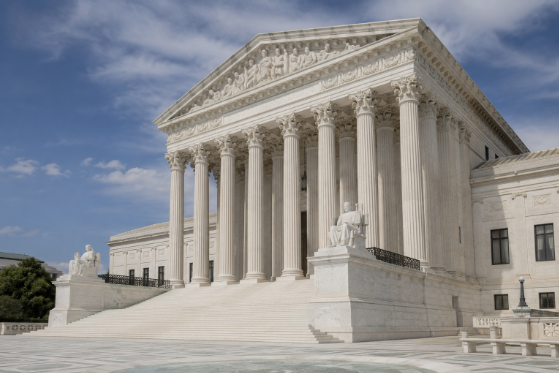
On June 29, 2026, the Supreme Court issued a 6-3 ruling in Trump v. Slaughter that overturned a 91-year-old precedent and gave the president the authority to fire the heads of independent federal regulatory agencies at will, for any reason or no reason at all. The ruling eliminated the legal protections that had kept agencies like the Equal Employment Opportunity Commission, the Federal Trade Commission, the National Labor Relations Board, and roughly two dozen other regulatory bodies insulated from direct presidential control since 1935. The only exception the Court carved out was the Federal Reserve. On July 7, 2026, the practical effect was immediate: a former EEOC commissioner fired by President Trump dropped her lawsuit challenging the dismissal, citing the ruling as her reason for conceding the case.
What Humphrey’s Executor Was and Why It Mattered
The case that governed independent agency law for nine decades was Humphrey’s Executor v. United States, decided by the Supreme Court in 1935. The ruling held that Congress could create agencies that exercise quasi-judicial and quasi-legislative functions and protect their members from removal by the president except for specific cause: inefficiency, neglect of duty, or malfeasance in office. The Federal Trade Commission was the agency at the center of that original case. The logic was straightforward: an agency designed to regulate corporations or enforce civil rights law on behalf of the public could not do its job if the president of the moment could simply remove anyone who reached an inconvenient conclusion. For 91 years, that logic held. It was the structural reason that agencies like the EEOC, the NLRB, the Consumer Product Safety Commission, the Merit Systems Protection Board, and the FCC were described as independent. They were staffed by commissioners with fixed terms who could not be removed for political disagreement. That legal architecture is now gone.
How the Case Began
In March 2025, President Trump fired two Democratic commissioners from the Federal Trade Commission: Rebecca Slaughter and Alvaro Bedoya. No cause was given. Trump’s notification to Slaughter said only that her “continued service on the FTC is inconsistent with my Administration’s priorities.” Federal law at the time said FTC commissioners could be removed only for “inefficiency, neglect of duty or malfeasance in office.” Slaughter sued. Lower courts ordered her reinstated, finding that the law meant what it said. Chief Justice John Roberts halted the lower court orders through the Supreme Court’s emergency docket, allowing the firing to stand while the legal challenge continued. Trump had also fired members of the National Labor Relations Board, the Merit Systems Protection Board, the Consumer Product Safety Commission, and the Equal Employment Opportunity Commission during this period. Those firings generated their own lawsuits, all of which were pending as the Court took up the Slaughter case.
What the Court Ruled
Chief Justice Roberts wrote the majority opinion. The Court held that the Constitution vests all executive power in the president, and that officers exercising executive authority must remain subject to presidential supervision and control, including the power to remove them at will. Roberts wrote that “if anything more is left of Humphrey’s, the Court overrules it,” leaving no ambiguity about the scope of the decision. The ruling was 6-3 along ideological lines. The majority’s position is grounded in the unitary executive theory, the view that the Constitution concentrates all executive authority in the president and that independent agencies exercise executive power and therefore cannot be shielded from presidential control. In a companion case, Trump v. Cook, the Court preserved limited removal protections for Federal Reserve governors, treating the Fed as a special case given its unique role in monetary policy. Every other independent agency lost its protection.
Which Agencies Are Now Subject to Direct Presidential Control
The ruling covers approximately two dozen multi-member independent agencies that Congress created and intended to operate outside direct White House control. The most significant, in terms of the number of Americans directly affected by their enforcement decisions, include: the Equal Employment Opportunity Commission, which enforces federal workplace anti-discrimination law across race, sex, religion, national origin, age, and disability; the National Labor Relations Board, which protects workers’ right to organize and engage in collective bargaining and investigates unfair labor practices; the Federal Trade Commission, which enforces antitrust law and consumer protection regulations; the Consumer Product Safety Commission, which sets and enforces safety standards for consumer products; the Merit Systems Protection Board, which is the primary appeals board for federal employees facing disciplinary action or termination; and the Federal Communications Commission, which regulates broadcast, cable, satellite, and telecommunications. For each of these agencies, the president can now remove commissioners immediately, nominate replacements within months, and redirect enforcement priorities from day one of any administration. No cause is required.
What Has Already Happened at the EEOC
The Equal Employment Opportunity Commission is the clearest example of what the ruling enables in practice. Trump fired two Democratic EEOC commissioners in 2025, including Jocelyn Samuels, who had been vice chair of the agency. Samuels sued. On July 7, 2026 — eight days after the Supreme Court’s ruling in Slaughter — Samuels dropped her lawsuit, citing the Court’s decision as the reason her legal challenge could no longer succeed. With the Democratic commissioners removed, Trump’s appointees now hold a working majority on the EEOC. The agency’s enforcement priorities have shifted: the EEOC has pursued cases challenging diversity and inclusion programs, weakened administrative guidance on protections for transgender workers, and taken up discrimination claims on behalf of white workers and U.S.-born workers in cases it previously would not have prioritized. The EEOC has also proposed eliminating the EEO-1 reporting requirement, a 60-year-old rule that requires employers with 100 or more workers to submit annual data on the race, ethnicity, and sex of their workforce — data that investigators have used for decades to identify discrimination patterns before individual employees even file complaints. The agency that is responsible for enforcing federal anti-discrimination law is now directing its enforcement power according to the political priorities of the sitting president.
What This Means Going Forward
Legal analysts and employment law experts have described the practical consequence of the ruling in a consistent way: federal enforcement of civil rights, labor, and consumer protection law will now reset with every presidential election. Because the for-cause removal protections are gone, an incoming president can immediately remove sitting commissioners who were appointed by the previous administration, nominate replacements whose priorities align with the new administration, and shift enforcement direction within months rather than waiting for commissioners’ fixed terms to expire. Agencies that were designed by Congress to insulate enforcement decisions from political pressure — to make civil rights law, labor law, and consumer protection law function as law rather than as a policy preference of whoever is in the White House — no longer have that structural protection. The dissent in the 6-3 ruling noted that the decision hands the president direct control over agencies whose entire purpose is to check the power of the executive branch and its allies. The ruling does not change the underlying statutes — the Civil Rights Act, the National Labor Relations Act, the Federal Trade Commission Act — but it changes who controls whether and how those laws are enforced.