
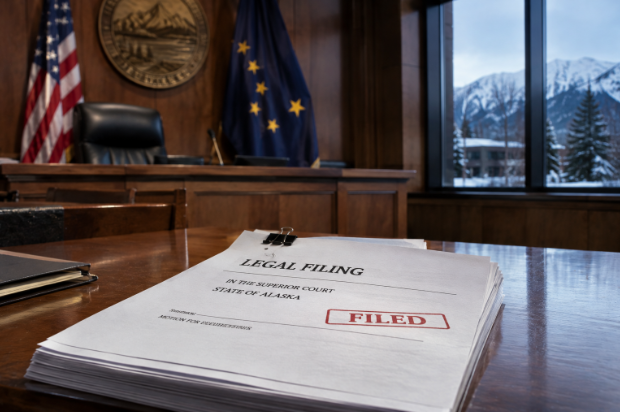
The admission came on an airport tarmac in Florida on Friday. Asked about the Justice Department’s new lawsuit seeking to block Alaska from certifying its Senate election, the president answered, I’m the one that said do it. The suit itself, filed late Thursday in federal court in Alaska against the state’s Division of Elections, asks a judge to forbid certifying the result if the Democrat, Mary Peltola, defeats Republican Senator Dan Sullivan, pending a federal investigation. Read that condition again, because it is the story. A sitting president ordered his Justice Department to preemptively block the certification of a specific opponent’s victory, twelve days before the votes were counted, and then said so on camera. This piece inventories the week the contest the results machinery moved into public view, state by state.
Alaska’s mechanics first, because the suit’s premise has a hole its own subject matter fills. There are two Dan Sullivans on the ballot. A challenger also named Daniel J. Sullivan qualified, the state Republican Party complained, election officials removed him, and Alaska’s courts, up through the state Supreme Court, ordered him restored. The Justice Department now argues voter confusion between the Sullivans could taint the outcome, writing that had those votes gone to the senator and the ranked choice process played out, the senator would have won, so certification of a Peltola win should wait on an investigation into a frivolous candidacy. Here is the arithmetic the filing walks past. Alaska votes by ranked choice. A voter worried about picking the wrong Sullivan can rank both, and the ballot lands exactly where they meant it. The system the president calls cheating contains the cure for the only harm the suit alleges.
The legal reality is short. Derek Muller, the Notre Dame election law professor, says the statute simply does not let the Justice Department enjoin certification, that the suit only activates on a narrow Republican loss, and that it probably will not survive long. The coverage calls it unprecedented, no administration has sued in advance to stop a certification before the election it concerns. The department’s own words supply the strangest line of the week. Hours before the filing, its leadership told reporters it is never the department’s intention to improperly interfere with elections or the certification process. The suit went in that night, signed by Associate Attorney General Stanley Woodward. By Friday evening, Peltola’s campaign, the Democratic Senatorial Campaign Committee, the League of Women Voters of Alaska, Common Cause and individual voters had all moved to intervene, with the DSCC calling it a sham built to steal a seat.
Alaska is not standing alone, which is why this reads as architecture rather than incident. On Monday the administration asked Washington state to sequester ballots in next week’s election that it claims could be cast by noncitizens, the same set aside demand it took to court against California, now aimed at a second all mail state. The template’s travel log is familiar to readers of this page. Nevada’s claimed 16,000 noncitizens, swept in by birthplace errors. California’s 190,000 that shrank to 20,000 by the courthouse steps. And the detail from the California hearing that explains the shrinkage, the government’s list was purchased commercial voter data analyzed by third parties.
California is also where the template meets its first appellate test, and the timing could not be tighter. The Ninth Circuit heard the administration’s appeal Monday, and a Trump appointed judge on the panel told the department’s lawyer that California appears to have legal authority to handle its own elections, with the panel promising a decision as quickly as possible. That ruling can land any hour, and whichever way it goes, it echoes directly into the Washington demand and the Alaska theory, because all three rest on the same claim, that the federal government may hold a state’s count hostage to its suspicions.
Then there is the bounty, announced the same Monday. The president said he is personally offering 1 million dollars to anyone who reports voter fraud in this election or past ones, on top of the administration’s existing 25 million dollar whistleblower program. Whatever one thinks of rewards for genuine evidence, every election administrator can do the arithmetic on what a standing cash prize does to the volume of claims arriving on November 3, independent of their truth. The reports generated become the predicate for the next round of suits, which is how a bounty and a litigation strategy fit together.
Assemble the month and the pattern needs no adjectives. The records reviews, the database injunction, the thumb drive ultimatum, the prosecution threats against counters, the criminal sweep, the mail rule appeals, the student ID order, the opposition’s counter suit, a county suing over armed agents, and now a suit filed in advance against one state’s outcome with ballot holds demanded in two more. Three weeks ago the top Democrats on the intelligence committees said they were operating on the presumption the president would claim fraud around the results. The presumption now has a docket number, and the president’s own week of commentary, the polls are all fixed, supplies the narration.
The honest accounting still gets its paragraph. The name confusion in Alaska is a real fact, a second Daniel J. Sullivan sits on the ballot by court order after Republicans tried to remove him, and states do investigate genuine irregularities. The administration’s frame is integrity, the attorney general defended the suit on Sunday television, and the department insists the aim is confidence in the result. All of that is in the record. So are the two sentences that survive every framing. The president said he ordered it. And the suit, by its own text, operates only if the Republican loses. Protective measures do not usually come with a party condition attached, and the judges reading the filing will notice the same clause everyone else did.
So the watch list for the final week is concrete. The Ninth Circuit’s ruling, due any hour. The Alaska judge’s first scheduling move, and whether the intervenors are admitted. Washington’s answer to the sequester demand. And underneath the filings, the thing no suit has slowed, more than 30 million ballots already banked at record pace. Certification is arithmetic performed in public, and this week the government asked three states to make their arithmetic wait for permission. What was said on the tarmac is on tape. What the courts do with it goes on the record, most of it before the counting even starts.