
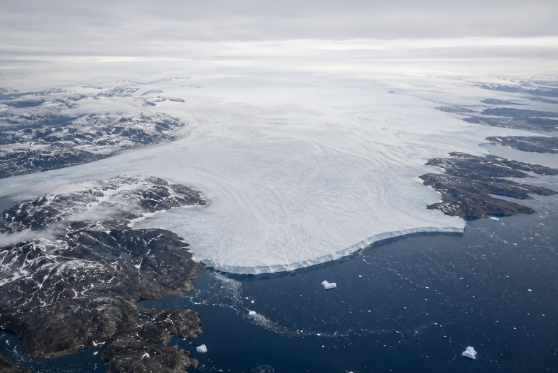
At a NATO summit in Ankara, Turkey on July 7 and 8, 2026, President Trump escalated his push to acquire Greenland, the self-governing Danish territory in the Arctic, telling reporters the United States needs the island “for the protection of the world” and suggesting the U.S. could withdraw all of its troops from Europe if its allies continue to resist. Danish Prime Minister Mette Frederiksen responded that Denmark is “ready to defend every inch of NATO, including our own territory.” Greenland’s own government has said it chooses Denmark over the United States. Legal scholars and historical precedent are clear that a president cannot acquire territory unilaterally — every recognized U.S. territorial acquisition has required an act of Congress. Trump has no congressional majority sufficient to ratify a treaty, and no treaty has been negotiated. The framework he announced in January 2026 has no publicly disclosed terms, and Danish officials say no direct discussions about sovereignty have taken place.
What Trump Said at NATO
During bilateral meetings at the NATO summit in Ankara on July 7, Trump told reporters that Europe’s refusal to support his push for Greenland is “what hurt my relationship with NATO.” He suggested the U.S. could remove all of its armed forces from Europe in response. On July 8, he doubled down, saying Washington needs Greenland “for the protection of the world” and that the island is “very important” for the U.S. but “not important for Denmark.” He claimed Greenland is “surrounded by China ships and Russian ships,” a characterization Arctic security experts have disputed. Trump first attempted to purchase Greenland in 2019, during his first term. Denmark’s then-prime minister called the idea “absurd” and canceled a planned visit. Trump is now using the threat of withdrawing U.S. military commitments — commitments established by treaty and paid for by American taxpayers — as leverage in a second attempt.
What the January Framework Was and Was Not
In January 2026, Trump announced that he and NATO Secretary-General Mark Rutte had reached “a framework of a future deal” on Greenland, and backed off a threat to impose 10 percent tariffs on eight European nations that had objected to his acquisition push. The announcement tamped down immediate tensions but resolved nothing. The specific terms of the framework have not been disclosed publicly. When asked whether U.S. ownership of Greenland was part of the deal, Trump said he “didn’t want to say yet” and called it “complex.” Danish officials told reporters that no direct discussions about sovereignty or the transfer of land to the United States had taken place. Rutte said NATO members would be expected to increase Arctic security spending. The working group established to discuss the framework, composed of U.S., Danish, and Greenlandic representatives, has been meeting since January. Denmark’s foreign minister has said she expects the group to produce a result by the end of 2026. Trump has said the deal’s time limit is “infinity” and described it as “forever.”
What Greenland Has Said
Greenland is a self-governing territory within the Kingdom of Denmark. Its roughly 56,000 residents elect their own parliament, known as the Inatsisartut, and have controlled their own domestic affairs since 1979, with expanded autonomy granted in 2009. A formal independence movement exists and has been active for years. Trump’s pressure campaign has not accelerated it — it has slowed it. Greenland’s Prime Minister has said that when forced to choose between the United States and Denmark, Greenland chooses Denmark. An independence report from Greenland’s self-government is expected by the end of 2026, but observers say the Trump administration’s coercive approach has complicated what had been a gradual, domestically driven process. Greenland has not expressed interest in becoming a U.S. territory or state.
Why Trump Says He Wants It
The administration has offered two main justifications. The first is strategic: Greenland sits in the Arctic between North America and Europe, providing a surveillance and defense position of significant military value for monitoring activity in the region. The U.S. already operates Pituffik Space Base — formerly Thule Air Base — in northwestern Greenland under a 1951 defense agreement with Denmark, and the January framework reportedly included discussions about stationing additional U.S. forces there. The second justification is economic: Greenland holds an estimated 36 million tonnes of rare earth elements, minerals that are essential for semiconductors, electronics, electric vehicles, and advanced military hardware. China controls approximately 80 percent of global rare earth production and uses that position as economic leverage. Acquiring access to Greenland’s deposits, the argument goes, would shift that balance. However, Arctic mining experts and analysts at institutions including Yale, CNBC, and the Center for Strategic and International Studies have described the economic case as far more complicated than the administration suggests. Most of Greenland’s rare earth deposits are in remote, ice-covered terrain with no infrastructure, making extraction costs among the highest in the world. A 2021 Greenlandic law banning uranium mining effectively halted the most significant rare earth project on the island, the Kvanefjeld deposit, because of uranium co-deposits. Experts have called the assumption that acquiring Greenland translates directly into rare earth independence from China “absurd.”
What the Constitution Actually Requires
The president does not have the authority to acquire territory on his own. Every recognized U.S. territorial acquisition in history has required Congress. The Louisiana Purchase in 1803 required a treaty ratified by the Senate and House appropriations. Florida was acquired by treaty in 1819. Texas was annexed by joint resolution of Congress in 1845. The Mexican Cession required the Treaty of Guadalupe Hidalgo in 1848. Alaska was purchased by treaty in 1867. Hawaii was annexed by joint resolution of Congress in 1898. Acquiring Greenland would require at minimum a treaty ratified by two-thirds of the Senate, 67 votes if all senators are present, plus House appropriations for any purchase price, plus legislation governing the territory’s status. Republicans currently hold 53 Senate seats. No bipartisan coalition supporting a Greenland acquisition treaty has formed. Two House bills have been introduced — the “Make Greenland Great Again Act” and the “Greenland Annexation and Statehood Act” — but neither has advanced. What Trump has described as a “framework” and a deal with no time limit remains, as of publication, a set of undisclosed terms attached to an ongoing working group with no binding agreement and no congressional authorization.
Where It Stands
As of July 8, 2026, Trump is at a NATO summit threatening to withdraw U.S. troops from Europe to pressure allies into acquiescing to an acquisition that Greenland does not want, that Denmark says it will defend against, that requires a two-thirds Senate vote he does not have, and that experts say would not deliver the rare earth independence the administration promises. The January framework has no public terms. The working group has produced no agreement. The constitutional requirements have not changed. The U.S. already has military access to Greenland under the 1951 treaty it signed with Denmark.