
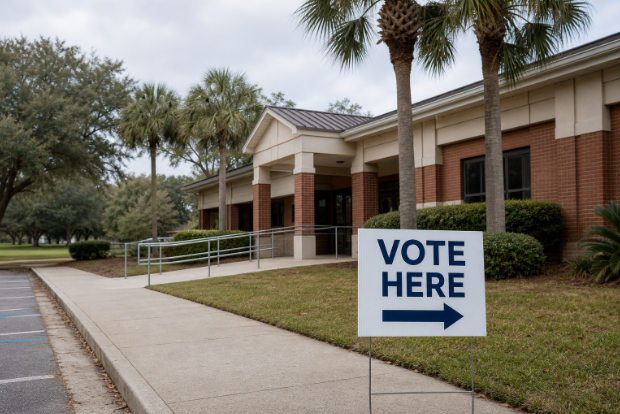
South Carolina Republicans vote Tuesday, August 25, in the runoff that will almost certainly decide who holds Lindsey Graham’s Senate seat. Senator Darline Graham — appointed to the seat after her brother’s death on July 11, encouraged to run by President Trump, and carrying his endorsement — led the ten-candidate special primary with 32.8 percent, well short of the majority South Carolina requires. Congressman Ralph Norman, the House Freedom Caucus member who took 24.6 percent, is betting that the two-thirds of primary voters who chose someone other than the appointed senator will consolidate behind him. He is also, openly, betting against the endorsement: in an interview with the Associated Press this week, Norman called Trump’s backing of Graham a “head scratcher.” After a primary season in which ten Trump-endorsed candidates have lost, including the MyPillow founder in Minnesota two weeks ago, Tuesday is the latest test of whether the most valuable endorsement in Republican politics still decides races — or merely enters them.
The Runoff Math
The August 11 special primary drew 335,693 voters. Graham took 109,881 votes, 32.8 percent; Norman 82,627, 24.6 percent. The candidates eliminated — Congressman Russell Fry at 19.7 percent, former Governor Mark Sanford at 14.9 percent, and six others — collectively hold roughly 42 percent of the primary electorate, and where those voters go, or whether they show up at all, decides Tuesday. Runoffs two weeks after a primary reliably shrink the electorate, which rewards the campaign whose voters are most motivated. Norman’s theory is that voters who backed Fry and Sanford were, definitionally, voters unpersuaded by the appointed senator, and that a second round consolidates the not-Graham vote. Graham’s theory is that her primary plurality, her brother’s network, and the president’s endorsement are the strongest forces in a low-turnout electorate. Early voting ran Wednesday through Friday, August 19 to 21; the candidates met in a televised debate on August 18. Polls are open Tuesday, and the result should be known Tuesday night.
Norman’s Case
Norman, 73, a real estate developer who has represented South Carolina’s 5th District since 2017, is making his second statewide run of the year: he sought the Republican nomination for governor and came up short in the June primary before entering the Senate race after Graham’s death. His argument, laid out in the AP interview, has three parts. First, experience — in Congress and in business — against a nominee who had never run for office before this month. Second, loyalty measured in votes rather than blood: Norman points to his record of voting for Trump’s legislative priorities, implicitly contrasting a demonstrated voting record with an endorsement bestowed on a newcomer. Third, vetting: Norman argues South Carolina voters have had barely six weeks to evaluate Darline Graham for a six-year term, while he has been through a statewide campaign this cycle. What Norman’s case conspicuously does not include is any attack on Trump himself; his position is that the president made an uncharacteristic mistake, not that the president’s judgment is generally suspect. It is the argument available to a Freedom Caucus conservative running against a Trump endorsee: the voters, not the endorsement, get the final word.
Graham’s Case
Darline Graham, 62, has been a senator for six weeks. Her case is continuity and mandate: she is finishing her brother’s term at the governor’s request and the president’s urging, she carries the endorsement of the president her party’s voters nominated three times, and she is the first woman ever to represent South Carolina in the Senate — a historical marker her campaign has embraced. Her biography reads differently than a standard political résumé, and her campaign has leaned into that: a career spent helping people with disabilities find work, a private life, and a family story — orphaned at 13, raised by the brother whose seat she now holds — that South Carolinians have heard Lindsey Graham tell for decades. The risk in her candidacy showed up in the primary result: with the presidency’s full weight behind her, two-thirds of Republican primary voters chose someone else. Whether that number reflected a crowded field or a verdict on the appointment is what Tuesday answers.
The Endorsement Test, Again
Trump did not merely endorse Darline Graham; by the AP’s account, he encouraged her to run in the first place. That makes Tuesday an unusually direct test. In most of this season’s endorsement failures — Lindell in Minnesota, Lauf in Florida, Degenfelder in Wyoming — Trump picked among existing candidates. Here the president helped create the candidacy, in a state he has carried three times, in a party primary electorate that is among the most pro-Trump in the country. If Graham wins, the endorsement did what it has done in most races this cycle: decided a Republican primary. If Norman wins, it will be the most direct rejection yet — a Trump-recruited, Trump-endorsed sitting senator, defeated by a congressman who called the endorsement a mistake to the president’s face, in South Carolina. Either way, Republican Senate candidates watching from the 2028 map will draw conclusions.
Where Things Stand
Tuesday’s winner faces Democrat Annie Andrews, a Charleston physician, in the November 3 general election for the seat’s full six-year term. South Carolina has not elected a Democrat to the Senate since Fritz Hollings, who retired in 2005, and the runoff winner will be a heavy favorite. That is precisely why Tuesday matters more than November here: in practice, South Carolina Republicans are choosing the state’s next senator. The polls close Tuesday evening. The People’s Podium will have the result and what it means on Wednesday.