
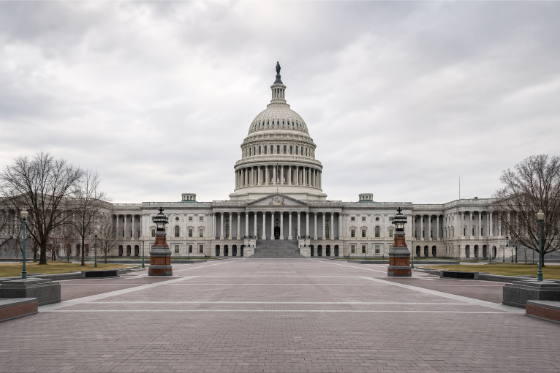
The Senate voted 89 to 4 on Monday, August 3, 2026, to advance a short-term government funding bill that would keep the federal government open through December 11, 2026, more than five weeks past the November 3 midterm elections. The vote is a procedural step — a cloture vote to begin formal debate — and the bill still needs to clear the full Senate and then the House of Representatives before it becomes law. The government has already shut down twice in 2026: once for four days in January and once for 76 days between February and April. The current round of federal funding expires on September 30, 2026, the last day of the federal fiscal year, leaving Congress roughly eight weeks to act before a potential third shutdown.
The Two Shutdowns This Year
The federal government shut down twice in early 2026, both times tied to congressional disputes over immigration enforcement spending. The first shutdown ran from January 31 to February 3, 2026, lasting four days and affecting roughly half of all federal departments before a short-term deal reopened the government. The second shutdown began on February 14 and lasted 76 days, running through April 30, 2026. It was limited primarily to the Department of Homeland Security but affected immigration enforcement, border operations, and related federal services for more than two and a half months. A funding agreement in late April ended the second shutdown and kept the broader federal government funded through September 30, 2026. That September 30 deadline is now approaching.
What a Continuing Resolution Is
A continuing resolution (CR) is legislation that keeps the federal government funded when Congress has not passed a full-year appropriations bill by the start of the new fiscal year. Rather than setting new spending levels and policy priorities in a detailed bill, a continuing resolution typically maintains agencies at roughly the same funding levels as the prior year for a defined period of time. Continuing resolutions do not resolve the underlying disagreements over spending — they postpone them. The federal fiscal year ends September 30 and a new one begins October 1. If Congress has not passed either a full appropriations bill or a continuing resolution by October 1, the government runs out of legal spending authority and a shutdown begins. Congress has used continuing resolutions frequently in recent decades rather than passing full-year appropriations bills on time.
What the Bill Does
The continuing resolution advanced Monday was negotiated by Senate Appropriations Committee Chair Susan Collins, a Republican from Maine, and the committee’s ranking Democrat, Patty Murray of Washington. It would maintain current federal funding levels through December 11, 2026. The bill includes several targeted adjustments: it extends and modifies funding for the Special Supplemental Nutrition Program for Women, Infants, and Children (WIC), a federal nutrition assistance program for low-income pregnant women, new mothers, and young children; it extends housing assistance programs; adjusts the Disaster Relief Fund; and includes provisions for shipbuilding and national security accounts. Collins described the bill as ‘straightforward’ and said it avoids ‘poison pills.’ Murray said Democrats successfully stripped out two provisions that appeared in an earlier House-passed version: a provision that would have added spending to fund military operations in Iran, and a provision that would have allowed transfers of federal funds to immigration enforcement operations.
The House Complication
Passing the Senate is only one step. The House of Representatives left Washington for its August recess before the Senate advanced the bill Monday and does not return until early September. The House had previously passed its own short-term funding bill that would keep the government open through December 4 rather than December 11, and included provisions the Senate Democrats blocked. Senate leaders announced Monday they would try to pass the bill before their own August recess, with the expectation that the House would then face a straightforward choice: accept the Senate version when it returns in September, or negotiate differences in a conference process, with the September 30 deadline bearing down. If both chambers do not resolve their differences and pass a funding bill before October 1, the federal government faces a third shutdown this year.
Why December 11
The choice of December 11 as the new funding deadline is not coincidental. Senate leaders on both sides of the aisle acknowledged that a primary goal of the legislation is to push any potential government shutdown past the November 3 midterm elections, in which all 435 House seats and 35 Senate seats are on the ballot. A government shutdown landing in October, in the final weeks of the campaign season, would create a difficult political environment for incumbents in both parties. By setting the new deadline at December 11, Congress gives itself a post-election window to negotiate full appropriations bills for fiscal year 2027 without the immediate threat of a shutdown. Senate Democratic leader Chuck Schumer called advancing the bill ‘responsible governing.’ Critics on both left and right noted that the primary motivation is straightforwardly electoral.
Where Things Stand
The Senate planned to hold additional procedural votes this week with the goal of passing the bill before leaving for its August recess. The four senators who voted against advancing the bill were Tim Kaine (D-Virginia), Rand Paul (R-Kentucky), Bernie Sanders (I-Vermont), and Elizabeth Warren (D-Massachusetts). Paul typically opposes government funding legislation on fiscal grounds; Sanders has said he opposes continuing resolutions and prefers full appropriations bills. Kaine and Warren had not offered a detailed public explanation of their votes as of Monday. If the Senate passes the bill, it will go to the House, which returns to Washington in early September, leaving roughly three weeks before the September 30 fiscal deadline. Whether the House passes the Senate version as-is or seeks changes in conference will determine whether Congress succeeds in averting a third shutdown this year.