At 2 p.m. Wednesday, the Federal Reserve raised its benchmark interest rate by a quarter point, to a range of 3.75 to 4 percent. It is the first increase since July 2023. The vote was unanimous, 12 to 0, and the twelve included Kevin Warsh, the chairman President Trump telephoned all summer. By late afternoon, the president was posting in capital letters.
Yesterday morning we told you what this day would test. Trump picked Warsh for the job. The Wall Street Journal reported the president has called him repeatedly since, a line of communication it described as a departure from recent precedent. On Sunday the White House’s top economic adviser said no hike was needed. Futures markets said 93 percent. The markets were right, and so was every incentive the committee has: inflation has run above its 2 percent target for more than five years, gasoline rose 3.9 percent in August alone, and on Wednesday morning the Census Bureau reported retail sales jumped 1.2 percent, the kind of consumer strength that settles arguments about whether the economy can take a hike.
The committee also did something quieter, and you have to read two versions of one sentence to catch it. July’s statement explained elevated inflation as “in part reflecting supply shocks that have driven price increases in certain sectors, including energy.” Wednesday’s statement deleted the explanation. The new language is three short sentences: “Inflation remains elevated. Today’s policy action will support a timelier return to the Committee’s 2 percent goal. The Committee will deliver price stability.” The Fed stopped explaining the fire and reached for the hose.
At 2:30, Warsh stood at the podium and claimed the hike in the first person plural. “Price stability is foundational to economic growth, and I think we took an important step today to deliver it,” he said. “We did it in part by removing the dose of accommodation.” He said the committee’s “predominant focus is on the price stability side of our mandate,” and described what changed since July’s hold: a stronger economy, inflation still elevated, and a changed geopolitical environment. At Jackson Hole in August he told the room “We have work to do.” Wednesday was the work.
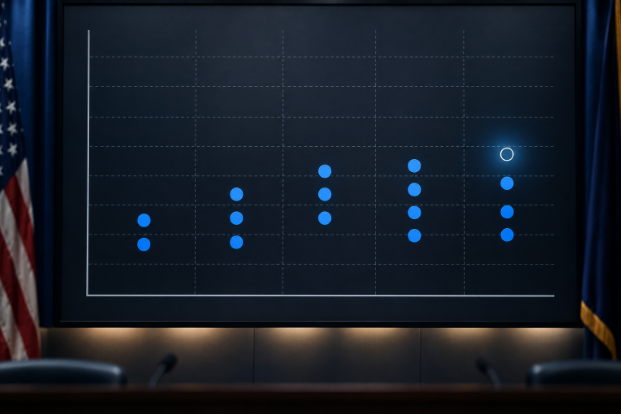
Then there is the chart with a hole in it. Alongside the decision, the Fed published its quarterly projections, the dot plot, where each policymaker pencils in where rates should go. The new median shows one more hike this year and another in 2027, with inflation not returning to 2 percent until 2029, a year later than the June projection. But the plot holds 18 dots, not 19, because Warsh again declined to submit his own, the second straight meeting he has left his dot blank. A Fed communications review is now weighing whether the dot plot survives at all. Read that pairing plainly: the committee published a forecast of more hikes, and the chairman who says the Fed will deliver would not put his own name, even anonymously, on where rates go next.
The president read the same projections. “Interest Rates in the United States should be 1%, or less,” he posted Wednesday afternoon, calling America “the Best Credit in the World.” A second post followed: “We are ‘carrying’ almost every country in the World, and that cannot go on any longer. LOWER THE INTEREST RATES FOR THE UNITED STATES OF AMERICA, AND FAST!” Asked by reporters, Trump said he still has confidence in Warsh, and also that he would not have chosen him for the job if he wanted rate hikes. Hold both of those in your head at once. The Journal called the Trump and Warsh arrangement a truce on Monday. The truce now has a 12 to 0 vote and an all caps response on the record.
Here is your bill, no longer hypothetical. Credit card rates are variable and track the Fed; the quarter point reaches your statement within a billing cycle or two. Adjustable mortgages, home equity lines and small business credit lines reprice on the same clock. New car loans cost more at the dealership. Savers get the one good line: high yield savings and CD rates tick up. Fixed mortgages key off the 10 year Treasury, which has been trading near 5 percent, its highest neighborhood since 2007. Stocks fell after the announcement, not on the hike everyone expected but on the dots promising another.
About that next one. The dot plot points at December 9, because the October meeting ends six days before the election and no committee wants to move rates six days before an election. December 9 sits in the week we mapped on Sunday: government funding runs out December 11, and the health insurance signup crunch lands mid month. If the dots hold, the next rate hike, the next shutdown deadline and the next premium shock arrive within days of each other, five weeks after the polls close.
So the month closes the way it opened. A strong jobs report gave the Fed room. Five years of high prices gave it the reason. The president asked for 1 percent, and the committee he staffed answered with the first hike in three years, twelve votes to none, another penciled in for cliff week. Between those numbers sits the one decision on the calendar that belongs to you. November 3. Forty seven days.