
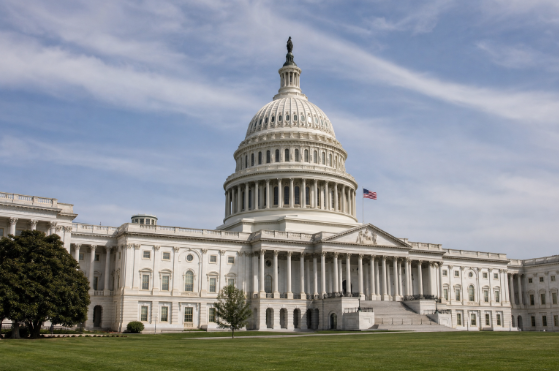
On July 22, 2026, the U.S. House of Representatives passed the Stop Insider Trading Act, a bill that would prohibit members of Congress, their spouses, and their dependent children from buying individual stocks while in office. The vote was 232 to 198. Thirteen Democrats joined nearly all Republicans in support. The bill does not require members to sell the stocks they already own, and it explicitly exempts the president and vice president. President Trump, whose financial disclosure filings show 3,642 securities transactions in the first quarter of 2026 alone, would not be covered. Republicans attached a provision requiring voters to show photo identification at the polls, which most Democrats cited as a reason to vote against the bill. The legislation now heads to the Senate, where its prospects are uncertain and its path to a vote has not been announced.
What the Bill Does
The Stop Insider Trading Act would bar sitting members of Congress and their immediate family members from purchasing individual publicly traded stocks. The prohibition applies to new purchases only. Members, their spouses, and their dependent children would be permitted to retain any stocks they currently hold and to sell those holdings over time. Before selling an existing position, members would be required to file a public notice of intent between seven and fourteen days in advance, giving the public visibility into anticipated sales but not restricting them. The bill also increases the fine for violating its disclosure and trading rules. Under current law — the Stop Trading on Congressional Knowledge Act, known as the STOCK Act, passed in 2012 — the penalty for an improperly disclosed or illegal trade is $200. The new bill would raise that to $2,000 or 10 percent of the transaction value, whichever is greater. No member of Congress has ever been criminally prosecuted for insider trading under the STOCK Act.
What the Bill Does Not Do
The bill contains several significant limitations that drew criticism from both Democrats and some reform advocates. First, it exempts the president and vice president. The bill’s text covers only sitting members of Congress and their families; the executive branch is not included. This means that even if the bill became law, Trump’s trading activity would continue outside its scope. Second, the bill does not require members to divest or sell their existing holdings. Members who currently own individual stocks may keep them. The bill would only prevent them from adding new positions going forward. Critics argued this falls short of a genuine conflict-of-interest remedy, since members could still be influenced by their existing portfolio of holdings when voting on legislation or policy. A competing Senate proposal — the Halting Ownership and Non-Ethical Stock Transactions Act, known as the HONEST Act, sponsored by Republican Senator Josh Hawley — would go further by requiring members to sell their existing individual stock holdings and would apply its ban to the president and vice president as well. The Hawley bill advanced out of a Senate committee in July 2025 but has not received a floor vote.
The Voter ID Provision
Republicans added a voter identification requirement to the Stop Insider Trading Act before bringing it to the floor. The provision requires voters to show photo identification at the polls. It is unrelated to the bill’s core subject of congressional stock trading. Democrats called the attachment a nonstarter and said it was a reason to vote against the bill even for members who supported the underlying trading restrictions. The addition meant the bill passed largely along party lines, with only thirteen Democrats crossing over to vote yes. Several Democrats who had co-sponsored earlier versions of a stock trading ban voted against the final bill because of the voter ID provision. Republicans defended the combined package, saying that both provisions promote public accountability. The bill’s mixed contents make its Senate path complicated: any Democrat who might otherwise support a stock trading ban faces political difficulty voting for a bill that also includes a voter ID requirement they have characterized as voter suppression.
Trump’s Trading Record
Financial disclosure filings submitted to the U.S. Office of Government Ethics show that accounts associated with President Trump executed 3,642 securities transactions during the first three months of 2026 — roughly 58 trades for every trading day in the quarter. The estimated value of those transactions ranges from $220 million to $750 million, a range produced by the disclosure format, which reports transactions in bands rather than exact figures. The filing was submitted late; a handwritten notation on the cover page reads ‘Filer paid late fees.’ The trades include securities in Microsoft, Meta Platforms, Oracle, Broadcom, Bank of America, Goldman Sachs, Nvidia, and other major companies. For the full year of 2025, Trump’s filings show approximately 21,000 securities trades. The filings do not specify whether Trump personally directed the trades or whether they were executed by a financial manager acting on a standing investment strategy. No charges have been filed, and no conclusions of wrongdoing have been reached. The Stop Insider Trading Act, as passed by the House, would not restrict or require disclosure of any of this activity.
Why the STOCK Act Was Not Enough
The STOCK Act, passed in 2012, was designed to address concerns about members of Congress trading on information they receive through their official duties. The law requires members to publicly disclose stock trades within 45 days of a transaction. But the law has been criticized on two grounds. First, its penalties are so low as to be effectively meaningless: $200 per violation, regardless of the size or profit of the trade. Second, enforcement has been minimal. In 2021, 57 members of Congress were found to have violated the STOCK Act’s disclosure requirements. In the 117th Congress (2021-2022), 78 members had failed to comply with the law at some point. Despite this, no member of Congress has ever faced criminal prosecution for a trading violation or insider trading under the STOCK Act. The Campaign Legal Center and other watchdog groups have argued for years that the combination of weak penalties and no independent enforcement mechanism has rendered the law largely symbolic. The Stop Insider Trading Act would modestly increase the penalty for violations but does not create an independent enforcement body or change who is responsible for investigating and prosecuting potential violations.
What Happens Next
The Stop Insider Trading Act now goes to the Senate, where it faces a difficult path. The Senate’s 60-vote threshold to overcome a filibuster means the bill would need bipartisan support to advance. Democrats who oppose the voter ID provision have called it a nonstarter, and without Democratic votes the bill cannot reach 60. A separate, stronger stock ban bill sponsored by Senator Hawley — which would cover the president and require existing holdings to be sold — remains in committee. The White House said Trump’s senior advisors would recommend he sign the House-passed version if it reached his desk. The midterm elections are November 3, 2026. Congressional stock trading has been a consistent point of public frustration with Washington for more than a decade, and members of both parties have used it as a campaign issue while the underlying trading activity has continued.