
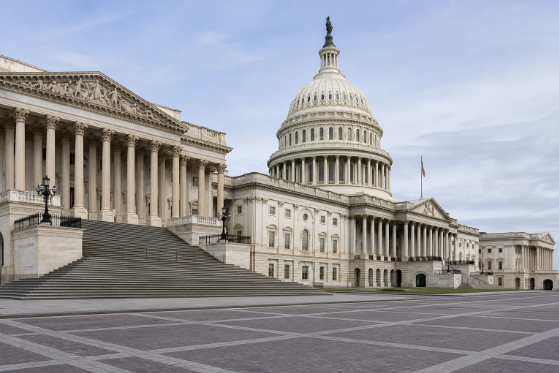
Senator Lisa Murkowski of Alaska announced on August 7, 2026, that she will vote against the confirmation of Todd Blanche as Attorney General of the United States, citing concerns about the politicization of the Justice Department under his leadership. Murkowski’s announcement comes three days after Senator Susan Collins of Maine declared she would also vote no, as senators prepare to leave Washington for the August recess. With Senator Mitch McConnell of Kentucky absent due to illness and unable to vote, Republicans have 52 available votes. With Collins and Murkowski both voting no, Republicans have 50 votes in favor if every other Republican holds. That is enough to confirm Blanche on a 50-49 vote — but only if Senator Bill Cassidy of Louisiana, the last prominent Republican critic of the nomination, also votes yes. If Cassidy votes no, Blanche’s confirmation fails.
Who Todd Blanche Is
Todd Blanche spent nearly 15 years as a federal prosecutor at the Justice Department, eventually becoming an Assistant United States Attorney and a supervisory prosecutor in the Southern District of New York, before leaving to build a white-collar criminal defense practice in private practice. He became Donald Trump’s personal criminal defense attorney and represented Trump through his federal and state criminal trials before Trump’s election in 2024. After serving as Deputy Attorney General — a position to which the Senate confirmed him 52-46 in March 2025 — Blanche became Acting Attorney General in April 2026 following Pam Bondi’s departure. Trump subsequently nominated him to hold the position permanently. That nomination puts Blanche before the Senate in a different posture: he is now seeking permanent confirmation as the nation’s top law-enforcement official, a role in which he would have ultimate supervisory authority over federal prosecutions handled by the Justice Department, after spending years as the personal defense attorney of the man whose administration he would lead. His Senate Judiciary Committee confirmation hearing took place on August 4, 2026, and the committee voted 12-10 along party lines to advance his nomination to the full Senate.
Why Collins Said No
Senator Collins offered three specific reasons for her opposition to Blanche’s confirmation. First, she cited Blanche’s handling of the Department of Justice’s $1.8 billion anti-weaponization fund, which was established through a settlement of Trump’s personal lawsuit against the IRS and which Blanche ultimately terminated under pressure from Collins and Senator Thom Tillis of North Carolina — but only after months of resistance and the night before his confirmation hearing began. Second, Collins stated that Blanche had made commitments to outside groups to restrict access to medication used in abortions through the mail, which she said represented a further politicization of the department. Third, and most seriously, Collins cited the Justice Department’s attempt to obtain a criminal indictment of six sitting members of Congress for making a video reminding service members of their legal obligation to refuse unlawful orders. A federal grand jury refused to return an indictment — an outcome so rare in the federal system that it is referred to as a ‘no true bill,’ and almost never occurs. Collins said the attempt itself, regardless of its failure, represented a dangerous use of prosecutorial power against elected officials engaged in speech about the law.
The Grand Jury Story
The attempted indictment of Democratic members of Congress is among the most significant and underreported developments of the Blanche tenure at the Justice Department. In early 2026, the U.S. Attorney’s office in Washington, D.C., led by Jeanine Pirro — the television personality appointed by Trump as the top federal prosecutor in the capital — brought a case before a grand jury seeking to indict six Democratic members of Congress. The six were Senators Mark Kelly of Arizona and Elissa Slotkin of Michigan, and Representatives Chrissy Houlahan of Pennsylvania, Chris Deluzio of Pennsylvania, Maggie Goodlander of New Hampshire, and Jason Crow of Colorado. The basis for the prosecution: the six had made a video in which they reminded United States service members of their legal and military obligation to refuse orders that violate federal law or the Constitution. Prosecutors argued that the video violated a federal statute prohibiting interference with the loyalty, morale, or discipline of the armed forces. The grand jury declined to indict — issuing a ‘no true bill,’ which effectively means the jurors found that prosecutors had not presented sufficient evidence to support the charges. Grand jury no true bills in federal cases are extraordinarily rare; federal prosecutors historically obtain indictments in the vast majority of cases they present to grand juries. The case represented an effort to criminally charge sitting members of Congress for a video about military law.
Why Murkowski Said No
Senator Murkowski did not express a vague concern about DOJ independence — she offered a specific list. In her statement, Murkowski cited the Justice Department’s handling of the Jeffrey Epstein files; immunity protections the administration sought to extend to Trump, his family, and his businesses; Blanche’s commitments to anti-abortion groups regarding restrictions on medication; the targeting of former officials and sitting senators; and the administration’s pursuit of the $1.8 billion anti-weaponization fund. Murkowski, who represents Alaska and has broken with the Trump administration on other issues, said those concerns left her without confidence that Blanche would check what she called the administration’s “worst impulses.” Her announcement, combined with Collins’, changes the arithmetic of the vote: Blanche is now confirmed 50-49 only if every remaining Republican votes yes, and fails 49-50 if Cassidy votes no.
Who Bill Cassidy Is
Bill Cassidy is the senior U.S. Senator from Louisiana and one of the seven Republican senators who voted to convict Trump in his second impeachment trial in 2021. He is not up for reelection in 2026. Cassidy is a physician by training who served in the House before moving to the Senate. He has been among the Republicans most willing to break with the Trump administration on individual votes, though he has voted with the administration on the majority of contested legislation. As of the morning of August 7, Cassidy had not publicly announced how he would vote on Blanche’s confirmation. He was reported to be meeting with Blanche and other senior administration officials ahead of the vote.
Where Things Stand
The full Senate vote on Todd Blanche’s nomination is scheduled for Friday, August 7, 2026. If Cassidy votes yes and every other Republican votes yes, Blanche is confirmed 50-49 with Vice President JD Vance not required to break a tie. If Cassidy votes no, Blanche fails 49-50 and Trump would need to either renominate him, nominate someone else, or continue operating with an acting attorney general. Trump has not publicly commented on the two Republican defections as of August 7. The confirmation vote is the last major piece of Senate business before the August recess. Senators are scheduled to depart Washington immediately after the vote.