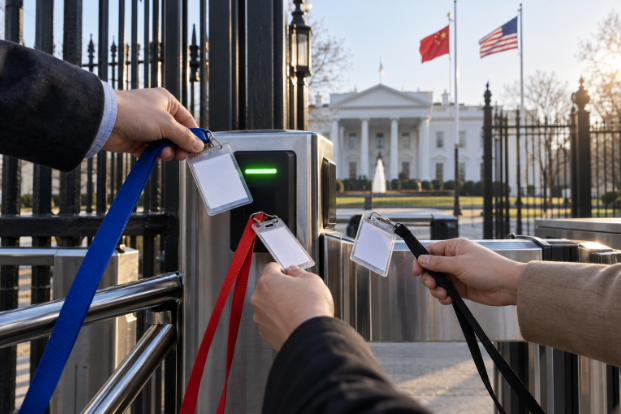
Early this morning, U.S. District Judge Timothy Kelly ordered the Trump administration to reinstate the White House press passes of CNN, MS NOW and Politico, immediately. Six days after three reporters’ badges died at the security gates, the badges come back on. And the timing carries its own footnote: the order landed hours before President Trump welcomes Chinese leader Xi Jinping to the White House, which means the first event the un-banned press corps covers is the one the administration least wanted covered loosely.
The ruling’s core is the point we have made since day one: process. Kelly found the passes were revoked without “constitutionally adequate due process,” quoting the general rule that individuals must receive notice and an opportunity to be heard before the government deprives them of a protected interest. The reporters got neither. The White House’s letters explaining the bans arrived on September 22, four days after the ban and only after the lawsuit was filed, and the administration’s claim that those letters constituted an appeals process did not survive contact with the calendar. Nothing here, Kelly wrote, is so “extraordinary” as to permit deviating from notice and a hearing.
Then he took apart the national security story, almost gently. Nothing in the record from before the lawsuit suggests security had anything to do with it: “that is not what President Trump said when he announced that he was ‘banning’ Plaintiffs from the White House,” Kelly wrote; the president “focused on the alleged lack of truthfulness and negativity of Plaintiffs’ reporting.” Even the after-the-fact letters hedged, citing reporting that “threatened national security and/or spread falsehoods,” an and/or that, as the judge noted, leaves open the possibility that every cited story sits in the falsehoods bucket. The government’s arguments “offer little to back up their asserted national security interest.” And the single CNN story the administration flagged as a security threat, a report on rebuilding a bunker under the East Wing, was published months before the White House itself renewed that reporter’s press pass this summer. You do not renew the credentials of a security threat. The record remembers.
The outlets’ lawyer, Ted Boutrous, had told the court that “the first mention of national security in this case” came days after the ban, as if “a light bulb went off” in the administration, and that the cited stories were “garden variety reporting.” Kelly’s ruling also disposed of the only standard the government could point to, a letter accusing an outlet of violating “the standards of professionalism and decorum expected of those given access,” as “so vague it hardly does the trick.” After the ruling, Boutrous called it “a strong ruling vindicating freedom of the press, due process and the rule of law.”
Be precise about what this is and is not. It is a temporary restraining order, in effect for 14 days, with a briefing plan that will produce a fuller opinion. It is not immediately appealable, by the judge’s own note, though Trump has said he will appeal. The ban could return in some future, better papered form; the president’s promise that other outlets would follow has not been withdrawn. But the 2018 rerun is now complete through its second act: the same judge who ordered Jim Acosta’s pass restored has ordered these three restored, and last time, the White House folded within days rather than keep losing. Watch whether the badges actually work at the gates this morning. Compliance is now the story.
The rest of the press corps did not wait on the sidelines. Nearly 50 news organizations signed a friend of the court brief urging exactly this result, compiled by the Reporters Committee for Freedom of the Press. The White House Correspondents’ Association summarized it in one sentence: the government cannot remove journalists from the White House because it dislikes their reporting, because “that is viewpoint discrimination, and a clear violation of the First Amendment.” The five network pool that went dark rather than replace banned CNN can now resume filming the president, which matters today of all days, with Xi in the building.
Tally what six days bought. A helipad ceremony no one could hear. A five network strike that put Fox News and CNN on the same statement. A federal lawsuit naming the chief of staff, the communications director and the head of the Secret Service. And now a ruling that quotes the president’s own posts as the evidence against him, the third time this month a federal court has been the only working brake, after the mail voting rule died at the Supreme Court and a judge ruled the FEMA cuts unlawful. The pattern’s other entries are still open: the purge database case is in its ninth day of silence at the Supreme Court, and the ICE locator we covered yesterday is still dark.
Kelly ended where this should end, with the reason any of it matters to people who never set foot in a briefing room. The public has an abiding interest in a free press, he wrote, which “stands as one of the great interpreters between the government and the people.” The interpreter is back at its desk this morning. The ban lasted six days. The next check on the pattern that produced it is not in any courtroom, and it is already open in four states. November 3. Forty days.