
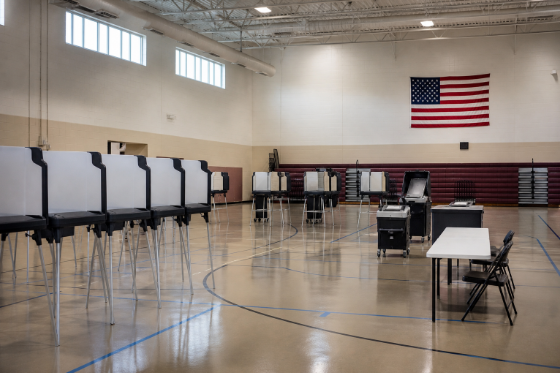
Voters in Minnesota, Wisconsin, Connecticut, and Vermont go to the polls on Tuesday, August 11, 2026, in the next round of primaries ahead of the November 3 midterm elections. Minnesota carries the day’s heaviest card: an open governor’s race created by Governor Tim Walz’s abrupt withdrawal in January, an open U.S. Senate seat created by Senator Tina Smith’s retirement, and a Republican gubernatorial primary in which President Trump’s endorsed candidate is Mike Lindell, the election-denial activist who stepped down as CEO of MyPillow on August 4 to focus on the race. On the Democratic side, U.S. Senator Amy Klobuchar is running for governor with her party’s endorsement. Wisconsin, meanwhile, holds its first governor’s primary without an incumbent in 16 years. Neither state’s November ballot will be fully set until Tuesday’s votes are counted.
Minnesota: The Governor’s Race
Governor Tim Walz, the 2024 Democratic vice presidential nominee, abruptly withdrew from the governor’s race in January 2026, throwing open a seat Democrats have held since 2011 and scrambling both parties’ plans. Senator Amy Klobuchar entered the race and won the Democratic-Farmer-Labor Party’s official endorsement in May, making her the clear front-runner for the Democratic nomination. On the Republican side, three main candidates are competing: Mike Lindell, the MyPillow founder who became one of the most prominent promoters of false claims that the 2020 election was stolen; Lisa Demuth, the Speaker of the Minnesota House of Representatives; and Kendall Qualls, a businessman and former Army officer who won the state Republican Party’s endorsement at its convention. President Trump endorsed Lindell on July 15, a move that upended what had been viewed as a competitive race. In a KSTP/SurveyUSA poll conducted after the endorsement, Lindell led with 35 percent of likely Republican primary voters to Demuth’s 26 percent and Qualls’ 11 percent. On August 4, one week before the primary, Lindell announced he was stepping down as CEO of MyPillow and reducing his ownership to a minority stake to focus on the campaign. The general election context is notable: Trump has never carried Minnesota, which last voted for a Republican presidential candidate in 1972.
Minnesota: The Open Senate Seat
Senator Tina Smith’s retirement opened Minnesota’s other statewide federal race, and the Democratic primary features two of the state’s most prominent Democrats: Lieutenant Governor Peggy Flanagan and U.S. Representative Angie Craig, who represents Minnesota’s 2nd Congressional District. The leading Republican candidates are Adam Schwarze, a former Navy SEAL, and Michele Tafoya, the former NBC sports broadcaster who has become a conservative commentator. The seat is one Democrats are defending in a cycle in which they need a net gain of four seats to retake the Senate majority, and Minnesota’s statewide races have tightened in recent cycles even as the state has remained out of Republican reach at the presidential level. A second layer of Senate stakes sits underneath the governor’s race: if Klobuchar wins the governorship in November, her own Senate seat, which does not expire until 2031, would open mid-term, meaning Minnesota could see both of its Senate seats change hands within a single election cycle.
Wisconsin: The First Open Governor’s Race in 16 Years
Governor Tony Evers announced in the summer of 2025 that he would not seek a third term, giving Wisconsin its first gubernatorial contest without an incumbent since 2010. The Democratic primary that formed in his wake has been turbulent. Milwaukee County Executive David Crowley dropped out of the race in early July and endorsed Lieutenant Governor Sara Rodriguez, then re-entered roughly a week later after Rodriguez’s campaign collapsed amid revelations of problems with her campaign finance reports; Rodriguez withdrew in mid-July. Crowley re-entered with Evers’ endorsement. Four Democrats remain on Tuesday’s ballot: Crowley, state Senator Kelda Roys, state Representative Francesca Hong, and Joel Brennan, a former state Department of Administration secretary. On the Republican side, U.S. Representative Tom Tiffany is the presumptive nominee. Wisconsin decided the 2024 presidential election by less than a point, and its governor’s race is expected to be among the most competitive in the country in November.
Connecticut and Vermont
Connecticut and Vermont round out Tuesday’s calendar with gubernatorial and congressional primaries of their own. Connecticut voters had access to early voting from August 3 through August 9 ahead of the Tuesday primary. Neither state’s contests carry the national profile of Minnesota’s or Wisconsin’s, but both will set November ballots in states where Democrats hold the congressional delegations and Republicans are contesting a small number of competitive districts.
What to Watch
The clearest national signal out of Tuesday will be what Republican primary voters in Minnesota do with Trump’s endorsement of Lindell. Trump’s endorsement record in 2026 primaries has been strong — Louisiana Republicans denied renomination to Senator Bill Cassidy after Trump backed his opponents, and Trump-endorsed candidates have prevailed in most contested primaries this cycle — but Lindell is a singular figure: a national symbol of 2020 election denial, endorsed for governor of a state no Republican presidential candidate has carried in more than five decades, over the objection of the state party apparatus that endorsed Qualls. If Lindell wins the nomination, Democrats will face him in a state they already hold; if he loses, it will be one of the few visible limits on Trump’s endorsement power this cycle. Results in the closest races may not be final on Tuesday night. The People’s Podium will follow up as the November matchups are set.