
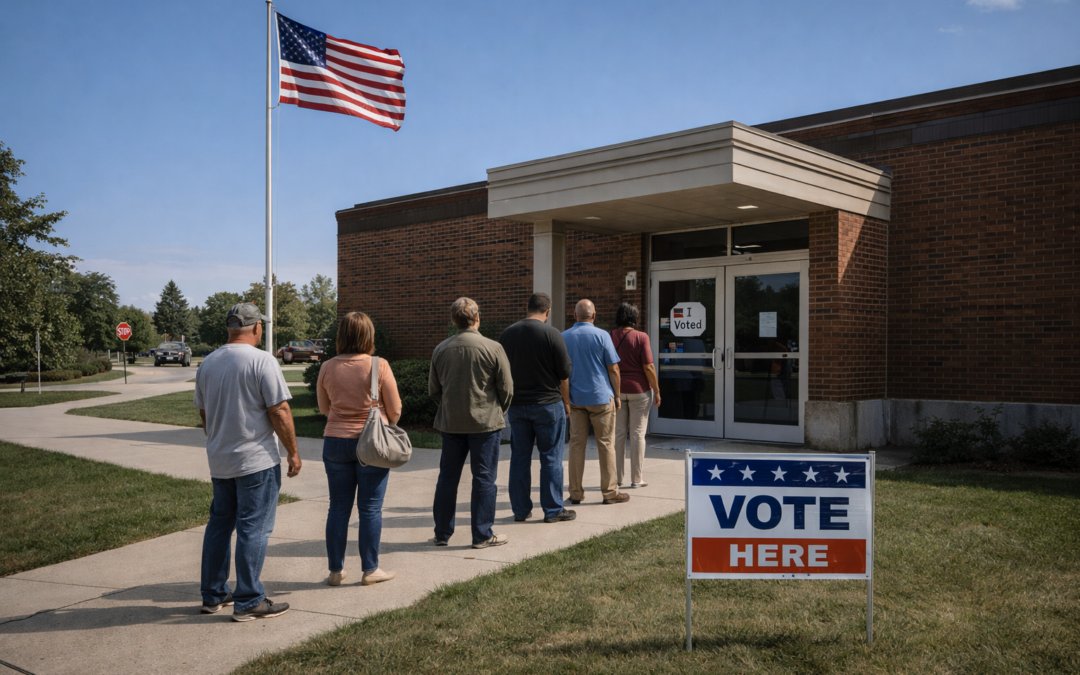
Analilia Mejia won New Jersey’s 11th Congressional District special election on April 16, defeating Republican Joe Hathaway 60 percent to 40 percent. The AP called the race for Mejia minutes after polls closed.
It was not close.
Who Mejia Is
Mejia is a progressive organizer who served as national political director for Bernie Sanders’ 2020 presidential campaign. She was backed by Sanders and Representative Alexandria Ocasio-Cortez, and she won a crowded Democratic primary in February before cruising to victory in the general.
She will be sworn in to serve out the remainder of the term through January 3, 2027, and is expected to run for a full term in November.
The District
NJ-11 covers parts of Essex, Morris, and Passaic counties in the wealthy suburbs of northern New Jersey. It was a Republican stronghold for decades. It flipped Democratic during Trump’s first term and has been trending left since. There are approximately 65,000 more registered Democrats than Republicans in the district.
Still, a 20-point margin in a special election in a district like this is a signal. Special elections tend to favor the party out of power when that party’s base is motivated, and Democratic turnout was high.
What It Does to the House
This is where the result has immediate consequences beyond New Jersey.
Republicans currently hold a razor-thin majority in the House. When Mejia is sworn in, Speaker Mike Johnson will be able to afford exactly one Republican defection on any party-line vote and still pass legislation. One. Any more than that and the bill fails.
That is not a comfortable position for a speaker trying to advance a legislative agenda while managing a fractious conference that has already shown it is willing to break ranks.
Democrats have now won a string of special elections during the Trump administration. Each one chips away at the buffer Republicans need to govern without negotiating internally. They do not need to flip the chamber through special elections to create problems for Johnson. They just need to keep winning them.
The Midterm Signal
Political analysts have long watched special elections as early indicators of where the midterm environment is heading. Voters who show up to fill a vacant congressional seat in an off-cycle election tend to be highly motivated. When one party dramatically outperforms expectations in those elections, it is usually a sign of something larger building.
The NJ-11 result fits a pattern. Democrats have been posting strong numbers in competitive districts since the start of Trump’s second term. Approval ratings for Republicans in Congress have dropped alongside the president’s. The Iran war, the government shutdown, and a series of contentious Cabinet firings have given Democratic base voters a consistent set of reasons to show up.
Whether that translates into a House majority in November depends on turnout across dozens of competitive districts. But a 20-point win in a district that Republicans held not long ago is the kind of result that makes incumbents in similar seats nervous.
What Hathaway Was Running On
Hathaway, the mayor of Randolph Township, ran as a Trump-aligned candidate supporting the administration’s immigration and economic agenda. He lost by 20 points in a suburban district that has been moving away from that message for most of the last decade.
The suburbs have been the critical battleground in American politics since 2016. NJ-11 is exactly the kind of district both parties are watching. Tuesday’s result was not ambiguous.
Mejia will head to Washington with a mandate from her district and an expectation from her progressive backers that she will push hard on the issues she ran on: healthcare, housing, immigration, and opposition to the administration’s war in Iran.
She ran as a progressive and won by 20 points. In a district that used to be reliably Republican. That is the story.