
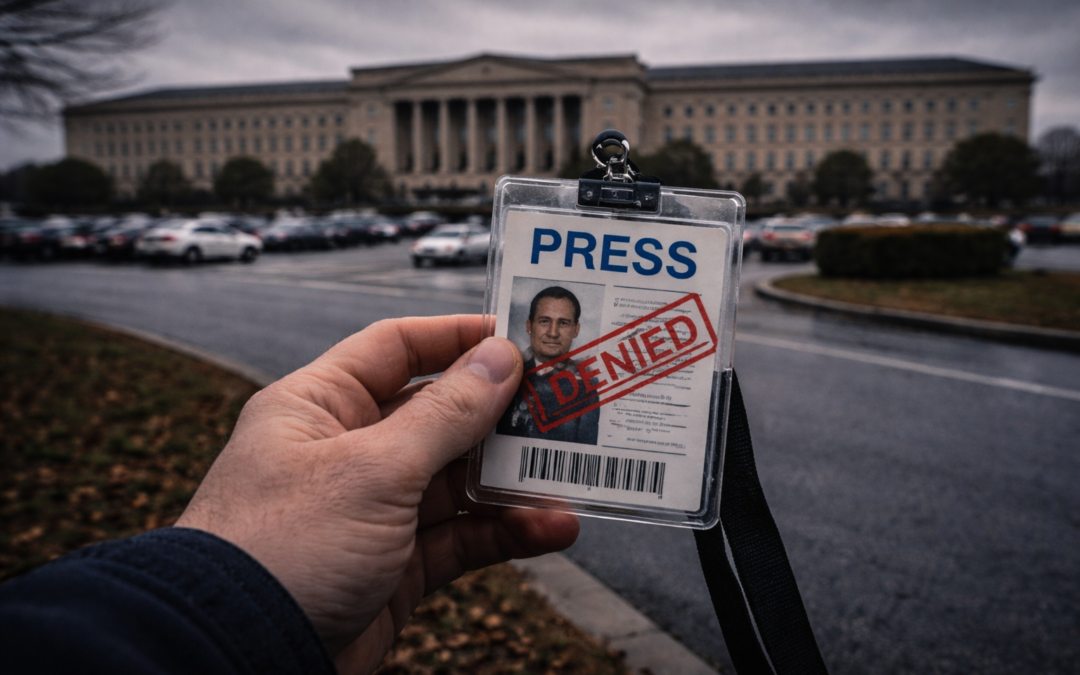
A federal judge ruled Friday that the Pentagon cannot require journalists to get government approval before reporting on the U.S. military — delivering a significant First Amendment victory in a case that press freedom advocates had been watching closely since the policy was first unveiled last fall.
The ruling came after months of standoffs, forfeited press credentials, and a lawsuit from one of the country’s most prominent news organizations. For now, at least, the government’s attempt to put itself in charge of what the public knows about its own military has been stopped.
What the Policy Actually Said
The Pentagon policy, rolled out by Defense Secretary Pete Hegseth last September, required media organizations to sign a pledge committing not to gather information about the Department of Defense unless officials formally authorized its release first.
The scope of the policy went well beyond classified material. It applied to unclassified information too — meaning journalists covering routine military operations, personnel decisions, or defense spending would need sign-off from the same officials they were reporting on before they could report at all.
The response from the press was swift. Press freedom organizations condemned the policy. Multiple news organizations turned in their Pentagon press credentials rather than sign the pledge. Among them was NPR, which surrendered its passes but continued reporting on the Pentagon regardless.
Fox News and Newsmax — outlets that rarely align with mainstream press freedom concerns — also refused to sign.
The Lawsuit
The New York Times filed suit in December against the Pentagon, Hegseth, and chief Pentagon spokesman Sean Parnell. The Times argued the policy violated the First Amendment and would strip the public of essential information about how its military operates and how its tax dollars are being spent.
The case moved quickly. By late Friday evening, U.S. District Court Judge Paul L. Friedman had sided with the Times.
In his ruling, Friedman wrote that the First Amendment was designed to give the press the power to publish information in the public interest “free of any official proscription.” He went further, finding that the evidence showed the policy was specifically designed to filter out journalists the government considered unfavorable — and replace them with reporters “on board and willing to serve” the administration.
That, the judge ruled, is textbook viewpoint discrimination. It violates both the First and Fifth Amendments.
“Those who drafted the First Amendment believed that the nation’s security requires a free press and an informed people,” Friedman wrote, “and that such security is endangered by governmental suppression of political speech. That principle has preserved the nation’s security for almost 250 years. It must not be abandoned now.”
Friedman ordered the Pentagon to immediately reinstate the credentials of seven Times journalists. When the Pentagon asked the judge to pause his ruling for a week to pursue an appeal, he refused.
The Pentagon Is Fighting It
The ruling is not the end of the story. Pentagon spokesman Sean Parnell posted a statement to social media hours after the decision came down.
“We disagree with the decision and are pursuing an immediate appeal,” he said.
The Times, for its part, welcomed the ruling but made clear what it was really about. “Americans deserve visibility into how their government is being run, and the actions the military is taking in their name and with their tax dollars,” said Times spokesperson Charlie Stadtlander. “Today’s ruling reaffirms the right of The Times and other independent media to continue to ask questions on the public’s behalf.”
Why It Matters
The policy Hegseth introduced last September was not a subtle tightening of media access. It was a structural attempt to make the government the final authority on what could be reported about the government. Under it, a journalist covering a military contractor scandal, a wrongful death, or a policy failure would first need approval from the very officials at the center of the story.
That the administration is appealing rather than accepting the ruling signals that the fight is not over. The case will likely continue through the courts in the months ahead — potentially landing before an appellate bench that could reach a very different conclusion.
What is clear is that the administration tried to build a system in which the press could only report what the Pentagon allowed. A federal judge said no. Whether that no holds is the next question.
The answer matters — not just for reporters, but for anyone who depends on journalism to know what is being done in their name.