
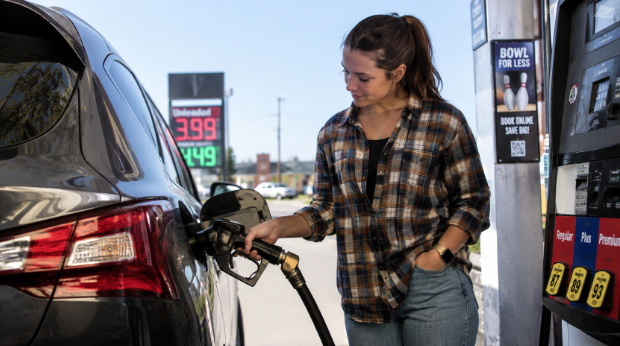
American drivers are finally getting some relief at the gas pump, but the welcome decline in prices could prove temporary.
The national average price for regular gasoline fell to approximately $4.01 per gallon Monday, putting it within striking distance of dropping below $4 for the first time since July, according to AAA.
That’s a significant improvement from just a month ago, when drivers were paying an average of $4.37 per gallon. Prices have fallen roughly 36 cents, or more than 8%, over the past 30 days.
The decline is already being felt across much of the country. Gasoline averages less than $4 per gallon in 26 states, with North Carolina reporting some of the lowest prices nationwide at approximately $3.26.
For families struggling with higher living expenses, cheaper gasoline offers some much-needed breathing room. But energy analysts caution that the forces pushing prices lower today may not last into next year.
Why Gas Prices Are Finally Coming Down
Much of the recent decline can be traced to the changing seasons.
With summer vacations over and colder weather arriving, Americans are spending less time behind the wheel. Shorter daylight hours also tend to reduce driving activity, contributing to weaker gasoline demand.
At the same time, oil refineries are continuing to produce substantial amounts of fuel to satisfy demand for diesel and jet fuel.
Unlike gasoline, which experiences a noticeable seasonal slowdown, diesel remains essential for commercial trucking, agriculture and heating. Airlines also continue to require jet fuel to serve travelers heading into the holiday season.
Because refineries produce multiple fuels from crude oil, maintaining high production levels for diesel and jet fuel also generates gasoline. That additional gasoline supply is helping push pump prices lower even as other energy products remain expensive.
The contrast is striking.
While gasoline prices have fallen considerably in recent weeks, diesel remains above $6 per gallon nationally, according to AAA. That continued pressure on transportation costs could keep prices elevated for goods delivered by truck, even as everyday motorists spend less filling their tanks.
Drivers Are Still Paying More Than Last Year
Despite the recent improvement, gasoline remains substantially more expensive than it was a year ago.
AAA data shows that the national average stood near $3.07 per gallon in November 2025, compared with approximately $4.01 today.
That difference adds up quickly for households that depend on their vehicles for commuting, shopping and family activities.
A driver purchasing 15 gallons of gasoline would spend approximately $60 at today’s national average, compared with about $46 at last year’s prices.
And the savings vary considerably depending on where Americans live.
While drivers in states such as North Carolina, Georgia and Texas are seeing prices well below the national average, motorists in California continue to face prices exceeding $5.70 per gallon.
Those regional differences illustrate why the national average doesn’t always reflect what individual households actually experience at the pump.
Why Gas Prices Could Rise Again in 2027
Although the outlook for the remainder of 2026 appears more favorable for drivers, analysts are increasingly concerned about what could happen next spring.
One major challenge is the damage inflicted on energy infrastructure during conflicts in the Middle East and Russia.
Attacks on refineries and other facilities have disrupted global fuel production, limiting the industry’s ability to respond quickly when demand rises.
Even if geopolitical tensions ease, damaged infrastructure cannot necessarily be restored overnight.
Another concern involves refinery maintenance.
Some oil companies have delayed scheduled maintenance to keep production running during a period of unusually high fuel demand. While that approach has helped maintain supply, the postponed work will eventually need to be completed.
When refineries shut down equipment for repairs and maintenance, fuel production can decline temporarily.
If multiple facilities undergo major maintenance during 2027, the resulting supply constraints could put renewed upward pressure on gasoline prices.
Independent oil analyst Tom Kloza warned in comments reported by CNN that the industry could face an especially demanding refinery maintenance period next year.
Combined with the traditional increase in gasoline demand during spring and summer, those disruptions could send prices back above $4 per gallon.
Why Prices Fall More Slowly Than They Rise
Another source of frustration for drivers is the speed at which gasoline prices change.
When wholesale fuel costs jump, retail gasoline prices often increase quickly. But when wholesale prices decline, consumers may notice that local stations take longer to pass along the savings.
Part of that difference comes down to how gas stations manage their inventory and profit margins.
Station owners purchase fuel at wholesale prices and compete with nearby businesses for customers. During periods of rapidly rising costs, some absorb temporarily reduced profits rather than immediately passing the entire increase along.
When wholesale prices eventually fall, those same operators may lower retail prices more gradually to rebuild their margins.
That helps explain why a decline in crude oil or wholesale gasoline prices doesn’t always translate into immediate savings at every station.
What Drivers Can Expect Next
For now, the direction of gasoline prices is encouraging.
Lower seasonal demand and relatively strong refinery output could allow the national average to slip below $4 in the coming days and potentially remain there through part of the winter.
However, the longer-term outlook remains uncertain.
Geopolitical disruptions, refinery maintenance and the return of spring driving demand could reverse the recent decline.
For Americans hoping to see gasoline return to the roughly $3-per-gallon prices of last year, that may take considerably longer.
The immediate outlook offers welcome savings, but the bigger question is whether those savings will survive when demand begins climbing again in 2027.