
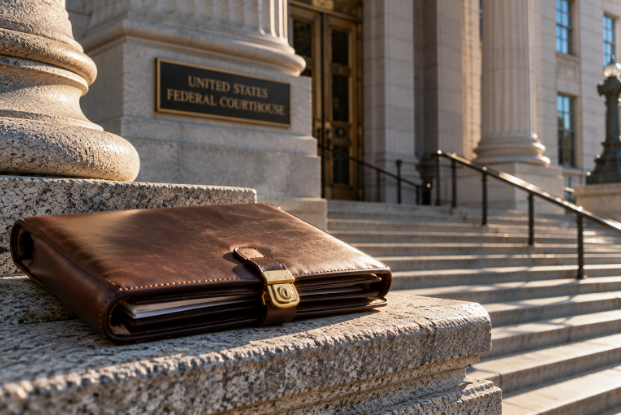
The answer arrived in the same building. One week after the Justice Department sued California to set aside 20,000 ballots, the story this newsletter covered Monday, the top Democrats in Congress filed their own 44 page lawsuit in federal court in Washington against President Trump, the Justice Department, the Department of Homeland Security and their leaders. Chuck Schumer and Hakeem Jeffries brought it alongside three national Democratic organizations, including the party’s House campaign arm, and one individual voter whose registration had already been canceled. The ask is the mirror image of the government’s. Where the administration wants ballots held, the suit wants the holding stopped, an order blocking federal officials from pressuring states to strip their rolls and from threatening the people who run elections. The machinery fight now runs in both directions, twelve days out.
The complaint’s core factual claim is about the lists. It says the administration has pushed states to act on shoddily compiled rosters of suspected noncitizens that crumbled upon the barest inspection, and it carries an exhibit this newsletter’s readers will recognize in shape. Homeland Security claimed Nevada had nearly 16,000 noncitizens on its rolls, and the lists swept in eligible Americans over data errors like mismatched birthplaces. The individual plaintiff is a voter whose registration was canceled that way. The pattern matches California’s arithmetic exactly, where the government’s own number fell from 190,000 in July to 20,000 by the time it reached a courtroom. Lists that shrink whenever someone checks them are the suit’s evidence, and the administration keeps supplying more of it.
The legal theory is narrower and sharper than the headlines suggest. The suit rests on Section 11 of the Voting Rights Act, the provision banning voter intimidation, and argues it covers the people who make voting possible, that threatening state and local election officials with prosecution for helping registered voters cast and count ballots is coercion the law forbids. The complaint cites the president’s own statement last week that California election officials would go to jail for a long period of time if they counted ballots the administration disputes, and Friday’s formal threat to prosecute workers who tabulate them. The relief sought is an injunction against the whole pressure campaign. The terrain favors the plaintiffs so far, every federal court to face the administration’s demands for state voter rolls has ruled against them.
Count the courtrooms this suit joins, because the week built a full docket. The California case and its shrinking number. The thumb drive ultimatum and the prosecution threats. The criminal sweep arrests announced days after the civil suit wobbled. ICE’s review of tens of millions of voter records. The mail ballot appeals pressed to the Supreme Court. The standing injunction a judge issued this month against the department’s database cross checks, which Common Cause says the California suit already violates. And the day before the Democrats filed, the county board of Arlington, Virginia sued the administration over its claimed authority to send armed federal agents to polling places. A state sued, a county sued, and now the opposition leadership sued, all inside eight days.
The responses deserve their full airing. The Justice Department says enforcing federal election law and election integrity is a top priority. White House spokeswoman Lauren Bis says the administration is taking decisive lawful action to protect elections, prosecuting election crimes and protecting vulnerable voters, while Democrats and the media dismiss fraud concerns. A Homeland Security spokesperson calls the suit another political stunt. Those statements sit on a record the coverage states plainly, investigations and audits have found no evidence of widespread voter fraud, and the administration’s lists, where tested, have come back wrong. A court will now weigh the statements against the record, which is what courts are for.
The second half of the story is about the day after the election, and it surfaced the same week. The top Democrats on the House and Senate intelligence committees said they are working under the presumption that the president will allege foreign meddling or fraud around the results, preparing for that claim before it arrives. The president, for his part, declared this week that the polls are all fixed, and senior Democrats have told reporters they worry about attempts to disrupt voting on Election Day itself. Read the two postures together. One side is pre narrating a dispute. The other is pre litigating one. Both parties are now openly preparing for November 4 before November 3 has happened, which is itself a fact about this election worth recording in plain terms.
None of it changes how you vote, and that is worth saying calmly. Rolls cannot be systematically purged inside the federal quiet window that closed in August. Your ballot’s path, early, by mail with tracking, or in person, is exactly what our guides laid out, and every banked ballot is outside the reach of everything described above. The one personal lesson in the complaint is the named plaintiff, an eligible voter who found out about a canceled registration the hard way. Check your status this week at your state’s site, because a problem found now is a fix, and the same problem found on November 3 is a provisional ballot and a wait.
The honest accounting owes both directions their due. Noncitizen registration occurs in small numbers, states remove it, and prosecuting actual fraud is legitimate government work. A lawsuit filed by party leaders twelve days before an election is also, unavoidably, a campaign act, messaging and law in one filing, and Democrats know the headline value of suing. What a court can measure is narrower than either side’s framing, whether the lists were reliable, whether the threats crossed Section 11, and the early returns on both questions sit in the record above. The next data points are mechanical, which judge draws the case, and whether a hearing lands before or after the votes.
So the week’s ledger reads like this. The government sued a state over 20,000 ballots it cannot yet substantiate. A county sued the government over armed agents at the polls. The opposition sued over threats to the people who count. Twelve days remain, the ballots are already moving, and the quiet machinery of early voting keeps setting records while the loud machinery fights in court. The counting will happen on schedule. What the courts decide afterward is what all of this was, enforcement or intimidation, and the filings of this one week will be the evidence.