
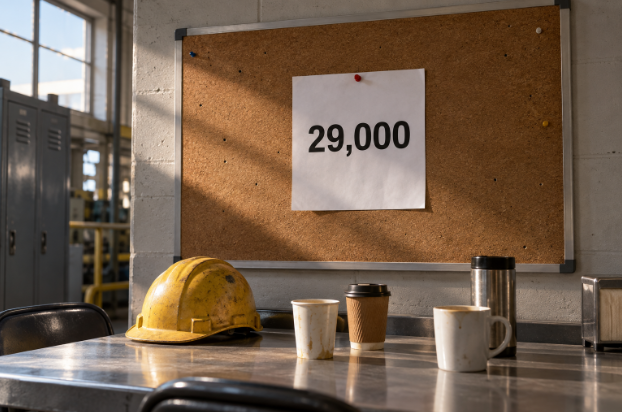
The number is 29,000. That is how many jobs the economy added in September, against a forecast of 84,000 and an August that had been reported at 162,000. The unemployment rate moved up to 4.2 percent after sitting at 4.1 for three straight months. And the calendar makes this one different from the eleven reports before it. The next monthly jobs count arrives three days after the election, which means Friday’s release is the final scoreboard reading voters will get. Whatever the campaigns say about the economy between now and November 3, this is the last official number underneath them.
Start with what happened to the months we thought we knew. August’s 162,000, the gain this newsletter reported as triple expectations, was revised down to 133,000, and the two month revisions together erased about 60,000 jobs from the summer. That continues the year’s pattern. The 2026 labor market has swung from losing 156,000 jobs in February to adding 214,000 in March, averaging roughly 80,000 a month, and the first print has repeatedly been the rosiest version of the story. The annual benchmark revision released in late September found about 79,000 fewer jobs added since the inauguration than originally reported, including 178,000 fewer in the private sector, by the Economic Policy Institute’s read of the government’s own correction. The headline arrives loud and the revision arrives quiet, and the revisions keep pointing the same direction.
Inside September, the hiring that did happen was narrow. Health care, construction and manufacturing added jobs. Government, information, and professional and business services cut them. Fewer than half of private industries added any jobs at all, the breadth measure economists watch to tell a slowdown from a stumble. And the quietest number in the report may matter most at the kitchen table. Average hourly earnings rose 0.1 percent for the month, the weakest reading of the year, putting wage growth at 3.0 percent over the past year while the Federal Reserve still describes inflation as elevated. The raise is slowing while the prices are not.
Now the honest part of the arithmetic, because this report genuinely contains two stories. The payroll survey, the one that produced 29,000, counts jobs at businesses. The separate household survey counts people, and it showed employment rising by 406,000 in September, with labor force participation climbing from 61.6 to 61.8 percent. Part of the reason unemployment ticked up is that more people came looking for work than the market absorbed, which is a different ailment than layoffs. One month of either survey is noise. The trend is the signal, and the trend says a market adding about 80,000 jobs a month, with slowing wages, narrowing breadth, and a rising jobless rate. Cooling, not cracking. For scale, the market averaged about 10,000 jobs a month in 2025, so even this cooling year is running well ahead of last year. Both things are true at once, and a fair reading carries both.
The report also lands in the middle of a collision with the Federal Reserve. The Fed raised interest rates by a quarter point in September, its first hike in three years, aimed at the inflation that followed the Iran war seven months ago. Rate hikes cool hiring on a delay, and September is the first month measured after the move. Before Friday’s release, markets gave a second hike at the Fed’s late October meeting only about a one in four chance. A 29,000 print argues loudly for the pause side of that debate, which cuts both ways for households. A pause spares mortgages and card rates another push upward. It also means the Fed is pausing because the job market gave it a reason to. A hike instead would mean the Fed read the same report and decided inflation was still the bigger fire, which would put rising borrowing costs and a softening job market in the same households at the same time.
The political ledger is short and plain. This is the last employment report before the midterms, the White House has been polling badly on the economy all fall, and the president said this week that he and Republicans have done a very bad job promoting their economic record, while the vice president calls the midterms an uphill climb. A 29,000 jobs month with a rising unemployment rate does not make that sale easier, and it arrives in the same season taxpayer money has been buying television ads that describe a very different economy. Voters can weigh the ad against the table above it.
For workers, the Labor Day arithmetic this newsletter ran in September now has an October update. The raise is 3.0 percent a year and decelerating. The unemployment rate is 4.2 and pointing up. The share of industries hiring is below half. None of those numbers is a crisis on its own, and all three moving the same direction at once is exactly what the middle of a slowdown looks like from the inside. The people who feel it first are the ones changing jobs, finishing school, or coming back into the workforce, the same group that showed up in the participation number looking for work. The wage line deserves one more sentence of plain arithmetic. One tenth of a percent on the average private wage is about four cents an hour, a bit over a dollar and a half a week full time, before prices take their share.
Here is what still lands before the vote. The September inflation report arrives in mid October and sets the Social Security cost of living adjustment for next year, announced the same week. The Fed decides on rates in late October with this jobs report on the table. Early voting is already underway in a growing list of states. And that is the whole list. No more jobs days, no more revisions until the polls close. The economic record the campaigns will argue about for the next month is now fully printed.
So the scoreboard goes dark with the score at 29,000 jobs, 4.2 percent unemployment, and a 3 percent raise against prices the Fed still calls too high. The argument about what those numbers mean belongs to the campaigns. The numbers themselves now belong to the voters. November 3.