
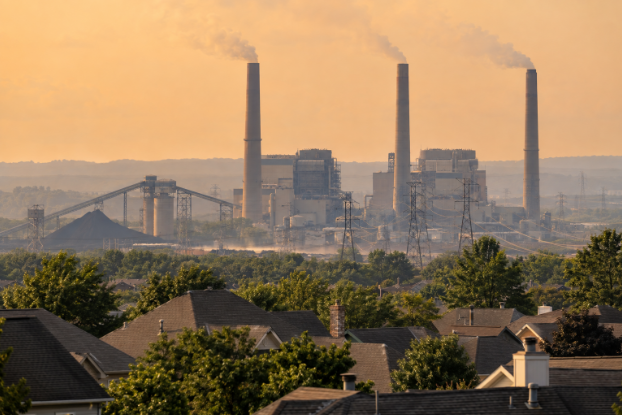
On Monday, the Environmental Protection Agency did two things at once, and the second is the one to watch. First, it finalized the repeal of the 2024 carbon pollution standards for power plants, the rules covering the coal and gas fleet responsible for more than 1.5 billion tons of climate pollution a year, the largest industrial source in the country. Then it proposed something more radical: a supplemental rule declaring that greenhouse gas emissions from power plants do not endanger public health at all, a finding designed to strip the agency of its own authority so that no future administration can regulate this pollution either. Repeal the rule, then burn the key to the room where rules are made. It landed at the end of the hottest summer in recorded history, the same week a federal court found the administration unlawfully halved the disaster agency that responds to climate driven catastrophes. The Natural Resources Defense Council announced within hours that it will sue.
What Was Repealed
The 2024 standards required existing coal plants and new gas plants, together responsible for almost a third of the nation’s carbon emissions, to cut their pollution using controls installed at the plant itself. That design was deliberate: after the Supreme Court’s 2022 ruling in West Virginia v. EPA limited how the agency could regulate, the standards were rebuilt around exactly the plant level approach the Court left open. The EPA’s own 2024 analysis found they would deliver a net 370 billion dollars in climate and health benefits, twenty times the cost to industry, while cutting the soot, smog, and mercury that cause asthma attacks, heart attacks, lung disease, and premature deaths, preventing thousands of the latter and hundreds of thousands of the former. An independent analysis in the journal Science called the standards a crucial backstop ensuring the power sector’s shift to cheaper wind, solar, and battery power actually delivers its pollution cuts. Monday’s action erases all of it, with the agency arguing the 2024 approach was either foreclosed by West Virginia v. EPA or unfeasible. For scale: if the American power sector were a country, its emissions would rank sixth in the world.
The Second Move Is the Real Story
Regulations come and go with administrations; that is ordinary Washington. The supplemental rule proposed Monday is not ordinary. It would repeal the endangerment finding for power plants, the formal scientific determination that their greenhouse gas emissions harm public health and welfare, which is the legal foundation the Clean Air Act requires before the EPA can regulate at all. Declare the pollution harmless, and the authority to regulate it dissolves, for this administration and every one after it. It is the same maneuver the agency ran on vehicle emissions earlier this year, covered in our reporting on the endangerment finding rescission in August, now aimed at the second largest emissions source in the country. Maggie Coulter, an attorney at the Center for Biological Diversity’s Climate Law Institute, put the claim plainly: “Denying the existence of a quarter of the country’s climate pollution is utterly reckless.” The scientific record the agency must overcome is not close. The move asks courts to accept that pollution driving the heat waves, storms, and wildfires of this specific summer poses no harm to the public living through them.
The Contradiction Heading to the Supreme Court
There is a legal trap buried in Monday’s move, and it is of the administration’s own making. On October 5, the Supreme Court hears Suncor Energy v. Boulder, a case about whether communities can sue fossil fuel companies over climate damages under state law. The administration’s position in that case is that state climate action is preempted, blocked, because federal regulation occupies the field. Monday’s rules eliminate the federal regulation. Per the Center for Biological Diversity, the government is now simultaneously telling the Supreme Court that federal power plant regulation displaces state action and telling the public that no such federal regulation should exist. Both arguments cannot be true, and environmental lawyers will make sure the justices notice.
What It Costs You
Set aside the planet for a moment and look at the bill. NRDC’s August analysis of the administration’s energy policies, of which Monday’s repeal is the centerpiece, projects they will destroy 700 billion dollars in planned power sector investment over the next decade and raise consumer electricity bills by more than 30 billion dollars a year by 2035, while cutting in half the carbon reductions the power sector was already on track to deliver through simple economics, because wind and solar are now the cheapest power available. NRDC president Manish Bapna: “Whatever your thoughts are on climate change, this is the latest in short-sighted Trump Administration energy policies that are likely to raise consumer bills by tens of billions of dollars over the next decade.” Readers of this newsletter will recognize the pattern from the tariff arc: a policy sold as strength that arrives, at the household level, as a higher bill.
The Fight From Here
NRDC says it will sue, with Bapna’s statement leaving no ambiguity: “Ignoring the immense harm to the public from this pollution is a clear violation of the Clean Air Act and of Supreme Court precedent. We will see them in court.” The repeal of the standards is final agency action, challengeable now; the endangerment proposal must survive public comment before it is finalized, which gives readers a rare direct lever, since comment periods are open to everyone and courts read the record they build. The vehicle endangerment repeal from earlier this year is already in litigation. And the courts hearing all of it are the same ones that, in the past week alone, blocked the FEMA cuts and let the mail ballot rule die. The administration’s environmental agenda now runs on the same track as its election agenda: losing on the record, betting on the appeal. Forty nine days before an election that will decide the Congress overseeing all of it, the biggest climate decision of the year is now a docket number in waiting.