
The Supreme Court ruled 6 to 3 on June 25, 2026, in Mullin v. Doe that the Trump administration can end Temporary Protected Status, a designation that lets people from countries in crisis live and work in the United States legally without facing deportation, for more than 350,000 Haitians and roughly 6,000 Syrians. The ruling reversed lower court orders out of Washington, D.C., and New York that had paused the terminations while the underlying lawsuits played out. The Court also held that a federal law, 8 U.S.C. Section 1254a(b)(5)(A), bars courts from reviewing the Secretary of Homeland Security’s decisions about Temporary Protected Status at all, meaning future challenges to ending the program for any country will have a much harder time even getting a hearing.
How Long These Designations Have Existed
The Department of Homeland Security designated Haiti for Temporary Protected Status in 2010, after a magnitude 7.0 earthquake killed hundreds of thousands of people and devastated the country’s infrastructure, and renewed it repeatedly in the years since due to ongoing gang violence and instability. Syria has held the designation since 2012, when then-Secretary of Homeland Security Janet Napolitano cited the Assad government’s deadly crackdown on dissenters. Both designations are now sixteen and fourteen years old, respectively, meaning many of the people covered have lived in the United States for over a decade, bought homes, raised children who are U.S. citizens, and built careers, none of which factored into the Court’s ruling.
The Dissent Pointed at the President’s Own Words
Haitian TPS holders had also argued the termination violated the Constitution’s equal protection guarantee because it was motivated by racial animus. The majority found no evidence of that. Justice Elena Kagan, writing in dissent and joined by Justices Sonia Sotomayor and Ketanji Brown Jackson, disagreed sharply, writing that “the evidence is there, plain to see, in the President’s statements, which the majority, and for that matter his own lawyers, cannot even bear to repeat.” Kagan’s dissent cited Trump’s past comments that Haitian immigrants in Springfield, Ohio were “eating the pets” of residents, his claim that Haitians living in the U.S. “probably have AIDS,” and his description of Haiti as a “shithole country.” Sotomayor took the additional, rare step of reading the dissent aloud from the bench, a signal usually reserved for cases justices consider especially consequential.
A Republican Warns of a Healthcare Crisis
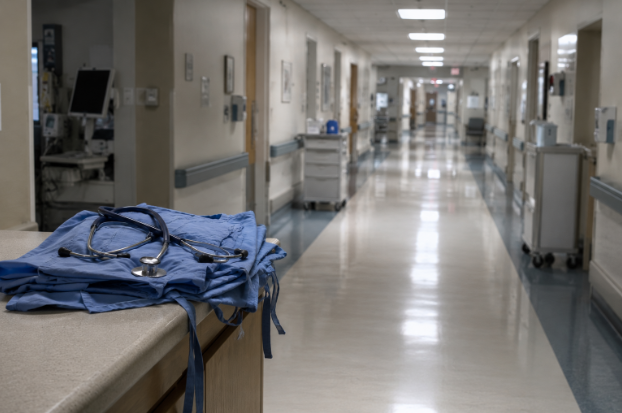
The clearest break from the ruling came from inside the president’s own party. Representative Mike Lawler, a Republican from New York, said he does not dispute the president’s legal authority to end TPS, but disagrees with ending it for Haitians right now. Lawler pointed out that roughly one third of Haitian TPS holders work in the U.S. healthcare system, in hospitals, nursing homes, and care facilities for people with intellectual and developmental disabilities, and said cutting them off immediately “will create a crisis” in those settings. Lawler said the situation inside Haiti remains a humanitarian and political disaster that still warrants an extension, and is pushing legislation with Representative Laura Gillen to temporarily extend the designation rather than end it outright.
Where It Stands
The ruling clears the legal path for the administration to begin ending work authorization and deportation protection for the people covered, though DHS has not yet announced exact termination dates for either country. Lawler’s bill to extend Haitian TPS has not been scheduled for a vote in either chamber. Unless Congress acts or the administration changes course, more than 350,000 people who have built lives in the United States for over a decade, including tens of thousands working in healthcare, are now waiting to find out when their legal status ends.