
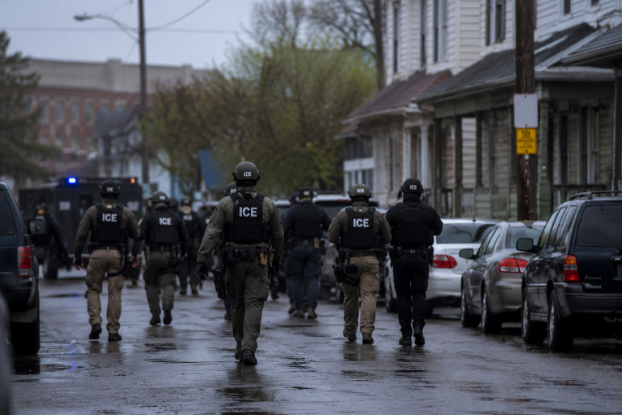
The House passed the Secure America Act on Tuesday, 214 to 212. The bill funds ICE and Border Patrol for the next three years at a total of roughly $70 billion. Zero Democrats voted for it. Zero of the accountability measures they demanded were included. It heads to President Trump’s desk for his expected signature.
The vote ends 115 days of one of the most disruptive funding standoffs in recent congressional history, one that started with two deaths, produced the longest partial government shutdown on record, and concluded with Republicans getting everything they wanted and Democrats getting nothing.
How the Standoff Started
In February, Senate Democrats voted to shut down the Department of Homeland Security after two American citizens were shot and killed during ICE operations in Minneapolis. Renee Good and Alex Pretti were killed by federal agents during immigration enforcement activities. Democrats said they would not vote to fund ICE until Congress put meaningful accountability measures in place.
The shutdown that followed lasted 75 days, the longest partial government shutdown in U.S. history. It ended with a bill that funded most of DHS but stripped out ICE and Border Patrol, because Republicans refused to accept Democratic demands. The two agencies have been running on emergency transfers and temporary funding ever since.
The Democratic demands were not extraordinary. They asked that ICE agents be required to wear body cameras. They asked that agents obtain judicial warrants before entering homes. Both are standard law enforcement practices. Republicans rejected them.
How Republicans Got It Passed
Because Democrats would not provide any votes, Republicans had no path through regular order. ICE and Border Patrol funding needed 60 Senate votes to overcome a filibuster, and Republicans have 53. So they used reconciliation, a fast-track budget process that requires only 51 Senate votes and prevents Democratic amendments from slowing it down.
The Senate passed 52 to 47 last Friday. The House followed Tuesday 214 to 212. Rep. Kevin Kiley of California, an independent who caucuses with Republicans, voted no alongside every Democrat. Kiley said he could not support locking in years of ICE funding through a reconciliation bill without any bipartisan reforms to interior enforcement. He is running for reelection in a district that shifted significantly toward Democrats after redistricting.
House Appropriations Chairman Tom Cole of Oklahoma said Democrats were using the shutdown as a political tool rather than a genuine policy response. Rep. Bennie Thompson of Mississippi, the top Democrat on the Homeland Security Committee, said his party had no apologies to make. We still stand on those principles, whether our Republican colleagues believe in them or not, Thompson said. Republicans are listening to Donald Trump, and only Donald Trump.
What the Bill Does and Does Not Do
The bill provides $38.6 billion to ICE and $22.6 billion to Border Patrol, funding both agencies through the end of Trump’s second term in 2029. The money gives the administration a multi-year financial runway for deportation operations without returning to Congress for additional appropriations.
The bill contains no requirement for body cameras. No warrant requirement for home entries. No independent oversight mechanism. No provision addressing the circumstances of the Good and Pretti killings that triggered the entire standoff in the first place.
A separate controversy that had nearly derailed the bill, a $1.8 billion anti-weaponization fund Trump wanted inserted to compensate political allies, was scrapped before final passage after Republicans in both chambers revolted. The fund does not appear in the final Secure America Act.
What Comes Next
Trump is expected to sign the bill. Once he does, ICE and Border Patrol will have stable, multi-year funding for the first time in his second term. The scramble for emergency transfers is over.
Funding for the rest of the federal government expires September 30. Congress will have to pass a new funding bill or face another shutdown before the end of the fiscal year. Democrats will have the same leverage they had here. The question is whether they use it differently.