
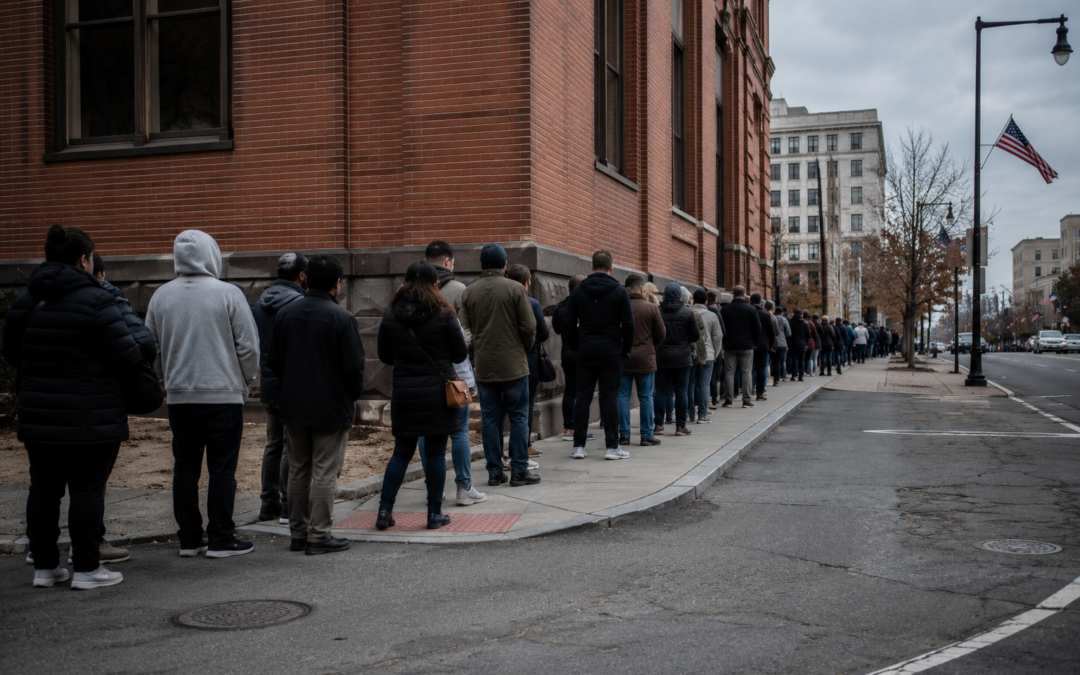
Georgia holds its primary elections tomorrow. Before a single ballot is counted, the race has already produced a number worth paying attention to: more than one million people voted early, breaking the previous record for any Georgia primary. Of those, 56.7 percent pulled Democratic ballots. Only 41.7 percent pulled Republican ones.
In 2022, Republicans had a 15-point early voting advantage over Democrats in the Georgia primary. Democrats now lead by 15 points. That is a 30-point swing in four years, and it fits a pattern that has been building across the country all cycle.
What Is on the Ballot
The marquee race on the Democratic side is the Senate primary, where incumbent Jon Ossoff is running unopposed and will face whoever survives a competitive Republican field in November. Ossoff is currently leading all of his potential opponents in head-to-head polling — up 4 points on Rep. Mike Collins, up 5 on Rep. Buddy Carter, and up 8 on Derek Dooley, son of legendary Georgia football coach Vince Dooley.
On the Democratic side for governor, former Atlanta Mayor Keisha Lance Bottoms is running in the high 40s in polling, far ahead of her closest Democratic competitor. The Republican gubernatorial primary is crowded and is expected to head to a runoff on June 16, as is the Republican Senate primary.
Republicans Are Spending More. Democrats Are Showing Up More.
The Republican Senate candidates have dominated the ad war. Rep. Carter alone has spent $5.5 million on advertising. The Democratic field, with Ossoff running unopposed, has not had to spend at the same rate.
But spending did not drive the turnout numbers. Democrats turned out in record numbers despite having less contested races at the top of their ballot, which makes the enthusiasm signal harder to dismiss. Voters are not showing up because they were dragged in by a competitive primary fight. They are showing up because they want to.
Georgia Is Not Alone
The Georgia numbers are the largest and most recent data point in a trend that NPR has been tracking across every state that has held primaries this year. In Texas, Democrats set early voting records. In North Carolina, Democrats outpaced Republicans. In Ohio, the two parties reached near parity in a state that has leaned Republican for years.
In 2022, the last midterm cycle, Republicans had a structural turnout advantage heading into November. That advantage is gone. In Georgia it has not just been erased — it has been reversed by 30 points.
What It Means for November
Georgia is the kind of state that decides Senate majorities. Ossoff’s seat is one Republicans identified early as a top target for a pickup. If they flip it, combined with other competitive races, they could hold the Senate despite a difficult national environment.
The early voting numbers do not guarantee anything. Primaries are not general elections. Enthusiasm in May does not always translate to November turnout. Republicans will have months to consolidate their base and pour money into the state.
But the pattern is consistent. Michigan swung 19 points Democratic in a special election in a district Harris won by 1. Texas set Democratic early voting records. North Carolina flipped. Georgia just produced a 30-point turnout reversal before primary day.
At some point the pattern stops being a fluke and starts being a forecast.