
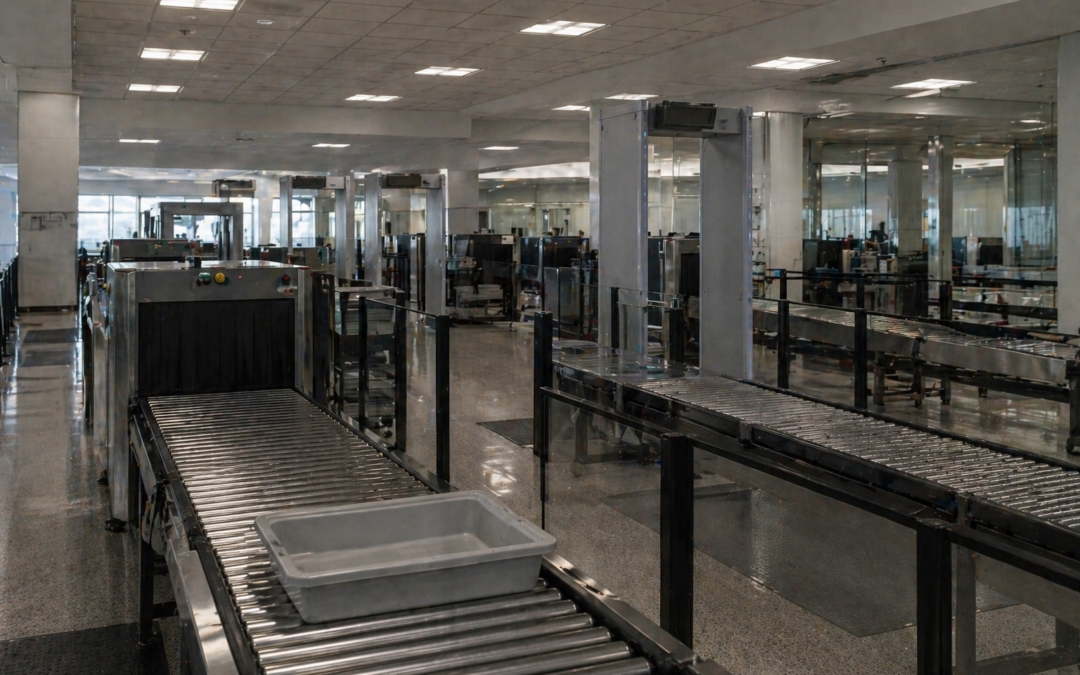
The Department of Homeland Security has been partially shut down since mid-February. Ten weeks later, Republicans still cannot agree on how to reopen it. Congressional leaders returned to Washington Monday facing what one outlet called a “nightmare week,” with a DHS funding vote, a spy powers bill, and a farm bill all on the agenda and none of them having the votes to pass.
Eight hundred and thirty-eight TSA officers have quit since the shutdown began. DHS warned last week it will run out of emergency funds to pay airport security workers as early as May. The party that ran on border security and law enforcement cannot agree on how to fund the agencies that do both.
What the Fight Is Actually About
The core dispute is straightforward. Senate Republicans passed a bill to fund all of DHS except ICE and CBP, the immigration enforcement agencies. Democrats had refused to fund those agencies without concessions Republicans would not make, so the Senate stripped them out and passed the rest. The bill cleared the Senate twice. House conservatives rejected it both times.
Their argument: funding DHS without funding immigration enforcement is a concession to Democrats that signals weakness on the issue they ran on. Their demand: fund everything together, including ICE and CBP, or fund nothing.
The result has been 10 weeks of TSA workers missing paychecks, quitting their jobs, and in some cases not showing up for shifts because they could not afford gas or childcare. Airport security lines have grown. DHS morale, according to workers who spoke to CNN, has never been lower.
Republicans Fighting Republicans
The standoff has opened a visible rift between House and Senate Republicans and between swing-district members and hardliners within the House itself.
Senator John Thune, the Senate Majority Leader, has grown openly impatient with Speaker Mike Johnson. Senate Republicans passed their funding bill. House Republicans rejected it. Thune has said he is willing to make minor technical changes but that anything beyond that is not workable.
Inside the House, swing-district Republicans are pushing back against conservatives who have blocked every deal. Representative Don Bacon of Nebraska sent a letter to leadership Friday alongside other vulnerable members urging Johnson to bring the Senate bill to the floor and pass it with Democratic votes if necessary. “Let’s stop doing the pretzel twister game with Republicans who never want to get to yes anyway,” Bacon said. “We are trying to accommodate 20 people. This is what is broken about Congress.”
The hardliners remain unmoved.
Johnson’s Problem
Speaker Johnson is caught between two groups he cannot afford to lose. He holds a majority so thin that he can spare exactly one vote on any party-line measure. The conservatives threatening to tank the DHS bill number well more than one.
His options are narrowing. The Washington Post reported Monday that the House may scrap the DHS funding bill entirely rather than bring it to a floor vote, extending the shutdown further. If Johnson brings the Senate bill to the floor and passes it with Democratic help, he risks a motion to vacate from the right flank. If he does nothing, the shutdown continues and TSA lines grow longer heading into summer travel season.
There is no clean exit.
What Is at Stake
The agencies affected by the shutdown are not abstract. TSA screened more than 900 million passengers last year. ICE and CBP, the agencies conservatives insist on funding together with the rest of DHS, have continued operating throughout the shutdown because they received separate funding through last year’s reconciliation bill.
The workers who have not been paid, who have quit, who are struggling to show up to screen passengers at American airports, work for TSA, not ICE. They are the ones bearing the cost of a political standoff about immigration enforcement funding for agencies that are still funded.
Republicans have spent 10 weeks unable to explain that to their own members. This week, with TSA emergency funds nearly exhausted and leadership out of options, they are going to have to figure out what comes next.